I know what you’re probably thinking — a young Millennial known for his hot takes is about to lay down the hammer on the older folks. Well, if that’s what you are hoping for, this probably will disappoint you.
I will certainly be laying out some critiques, but this message overall is meant to inspire and encourage the older generations to be exactly that: the older generations, the heroes we need in our day and age. The heroes that every age needed. But that we are missing at historical levels in our current moment.
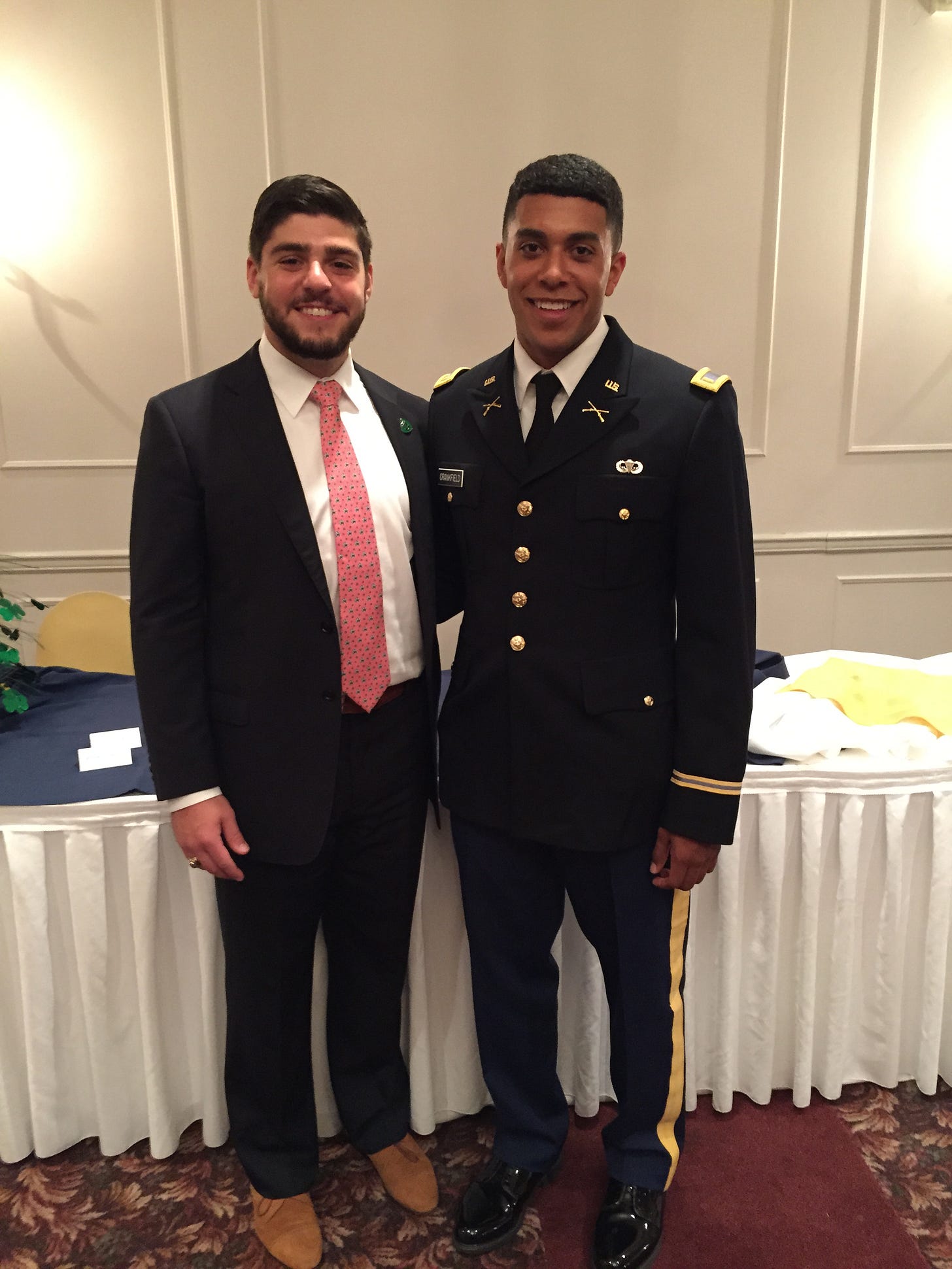
Here is a photo with one of my mentors and heroes in life, President Stephen Minnis of Benedictine College.

The Context
First, a personal story to help lay the context.
Earlier this year, I attended a Catholic men’s conference in Kansas City. You typically find a few common personas at these men’s conferences:
The young, optimistic, hopeful guy who is there to learn more about what it means to be a great Catholic man.
The older, wise Catholic man who has managed to successfully live out much of the wisdom that is shared. He has grown faithful children and feels affirmed by what is shared from those holding the microphone.
The late convert/revert to the faith — the man who feels as though, whether to a large or small degree, that he has failed his children by his late conversion, neglecting to live out most of the principles shared by the presenters at the conference.
I’d put myself in category 1. The majority of the audience tends to be about a 30/70 split between 2 and 3. The problem is that a great chasm exists in our parishes and society between men in category 1 and those in categories 2 and 3.
This became clear when I was standing in line for confession. The men behind me were talking openly about how their adult children don’t practice the faith, sharing how hard it can be to hear about all the things they wish they’d known in their 20s and 30s.
Hearing this, I get this overwhelming sense that they believe they wasted the time when their kids would have listened to them, and now that they lack that same influence, they feel there is next to nothing they can do. They feel like they have nothing to offer. And so, they go to mass, volunteer where they can, and enjoy their early-morning men’s group meetings, surrounded by other old men with the same frustrations.
You can imagine my surprise when, despite our having just met earlier that day, one of them asked me my opinion on the matter. “Why do you think our adult children won’t listen to us? You’re here today. Why are you still Catholic?”
It’s one of the most common questions I get from dejected parents with adult, secular children. And it’s a fair one. But the truth is that the negative emotions they are feeling are quite valid. Many older parents simply missed the boat on their children. You only have them, and their ear, for so long. Your presence and example matter a LOT when they are small. And if you blow it, you don’t get to just redo it when they’re in their 30s.
But that’s not why we’re here today. We’re here today to discuss the same perspective change that I provided these men on the day of the conference by simply replying to them:
“Man, I don’t know what happened with your adult kids, but I can tell you that there are many young men who could benefit from learning from you and would be eager to listen. I haven’t spoken to my Dad in two years. I have a demanding job. I’ve got two young kids and a wife. And I’m generally just out here navigating it all alone. I’ve almost never had an older man at any parish I’ve belonged to, or even visited, invite me out to lunch or breakfast to get to know me and share some wisdom. You have a lot to offer, even if the ones you most desperately desire to give it to don’t want it.”
You have a lot to offer. There are many people who need it. But you’re so upset that those you want to give the gift to keep rejecting it that you won’t just hand it to the next person standing there with open arms.
I witnessed the light bulb come on. I saw the click. And this is what I want to encourage today.
The Coddling of the American Mind and Soul
Millennials and Gen Zers were raised, for the most part, by parents who coddled them into ineptitude. Regarding faith, we had parents who tried to entirely outsource the responsibility for being our primary educators. We were eagerly dropped off at college—unable to do laundry, cook dinner, or avoid signing up for debt that would financially paralyze us for decades.
We were sent to school for education, but we were never really formed. We now have many women who want to be stay-at-home moms, some of whom were even raised by stay-at-home moms, who have no idea how to run a household. We have men who were never taught by their fathers what it means to be a good husband and father, who were never shown or trained how to provide, protect, and lead.
My mom, like many of my friends’ moms, did almost everything for me when I was younger. I had to occasionally empty the dishwasher or walk the dog, but I certainly wasn’t waking up to long to-do lists on Saturday mornings. And did I complain about this then? Absolutely not. I thought I was living the dream.
My friends mostly thought the same. They enjoyed the helicopter parenting. Mom stayed on top of your upcoming due dates for projects and homework assignments. Even into college, some moms are scheduling every appointment and need for their adult kids. I was blessed that the Army didn’t play that game, so even in ROTC, I had to start taking ownership of my life and growing up.

Most, however, didn’t choose to join the military. And they were unburdened of responsibility well into their 20s, unlike the generations before us. And unlike those who came before us, many young people today find themselves unable to cope with everyday life.
And somehow, they are told that this is their fault.
I believe this is the root cause of the intergenerational tension we experience today. For years, the older folks talked about how lazy and entitled millennials were and how emotional and odd Gen Z is. Now, the latter two blame the older generations for creating a political, economic, and familial environment that has put us in a downward spiral we’re unsure we can correct.
It is a general rule that finding the right person to blame for a problem is less useful than finding a good solution, so that will remain our focus for today.
If you enjoy this type of thought-provoking content, subscribe for more. I am so thankful for the encouragement of free subscribers and the support of paid members.
See a Need, Fill a Need
Boomers and Gen Xers, we need you. We need you to step up and fill the gap that you or your peers helped create. We need you to stop lamenting the failures of the past and to be involved in making a better future.
Let me give you some examples of what this can look like.
We recently had a friend over for dinner. She and her roommates are all single girls in their mid-20s. She told us about their “wife nights”, where they go over to a woman’s house and learn what it looks like to manage a household. The host is a 45-year-old woman whom they met through Church. She cooks with them, shows them how to plan meals and grocery shop for a family of 7, and how she balances everything that needs to get done in a given week.
When my wife and I were expecting our first, I told her I wanted to have a “Dad party”. As I mentioned earlier, my father and I don’t have the best relationship. Besides, he’s had seven children with five different women, several of whom he hardly raised at all. I wouldn’t say he’s what I aim to be as a father.
Luckily for me, my wife’s family was close to some really amazing Dads in their 40s. My wife contacted one of their wives with the idea. And she and her husband ran with it. He invited about six of his good friends and family members, most of whom I knew, over for a bonfire complete with bourbon and some good food.
We sat around the fire for almost four hours while I asked questions about fatherhood and marriage. What’s amazing is that I think each one of them enjoyed and benefited from it, albeit in different ways, almost as much as I did.
We have bridal showers, baby showers, dress shopping, and all types of things where older and younger women come together to celebrate and shape a woman who is entering a new, hugely important stage of life. And what do men have? Bachelor parties. It’s insufficient and needs to be addressed, especially in light of today’s crisis of masculinity.
Why can’t every church in America do this quarterly for new dads? How much would this simple night change the world?
A man I know has been extremely financially successful. He would fall into category 3 under our definitions above, although he seemed pretty intentional and faithful even when his kids were young. His situation is much more of a mystery to me.
But he takes it upon himself to coach young men with growing families who probably couldn’t afford an executive coach. He volunteers his time to help them with their business/leadership decisions, both at work and at home.
And I don’t think we consider this sort of generosity enough. My wife and I were at a fancy steakhouse in Denver about a year ago, just dreaming about the future. I told her how much I’d love to take young, engaged couples out and just share hard-earned wisdom on marriage and family life with them over an expensive, lovely 3-hour dinner.
We just did this recently, where we had a young couple over for steaks at home. They are expecting their first child this fall, and we thought it would be wonderful to host them, get to know them, and see what we could offer in the realm of the life-altering event that is becoming a parent. It doesn’t have to be fancy or expensive. The most valuable thing you can offer someone is your time and active listening.
Where to go from here
I think people overuse priests as spiritual directors. It wasn’t meant to be this way. Most people don’t need a priest for spiritual direction. What they really need is mentorship from a wise, virtuous person of the same sex who is further down the road than they are. Priests have their place, and it is an extremely important one. But as their population declines, we need them to do the work only they can do.
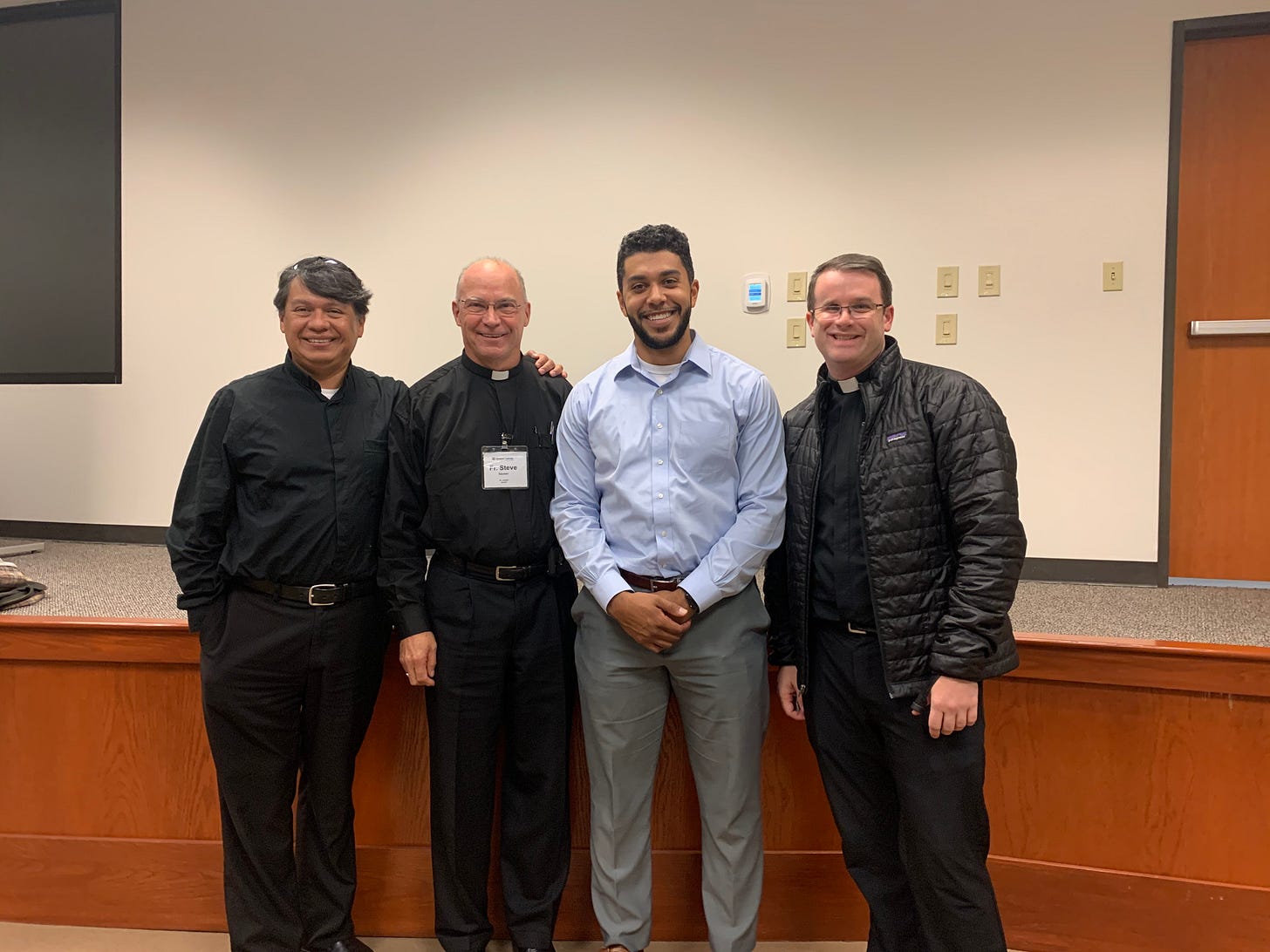
Mentorship is not one of those things. Priests and religious need spiritual directors. People with serious mental health issues need therapy. But most of us just need someone to talk to who can help us feel heard, understood, encouraged, and challenged to be better.
You don’t have to wait to be a mentor and help others. You don’t need to have your life all put together to love someone. Sure, if your life is a blazing dumpster fire, perhaps you aim for more presence and support than providing advice, but even those who may feel like they know a lot more of what not to do than what actually makes for a good life can provide support to young families in numerous ways.
If you’re in college or young adulthood, try to find a high school or college student who could use a listening ear and an older friend.
If you’re in your early 30s like me, find those young dating, engaged, or recently married couples who you can support through these transitions.
If your kids are now all in grade school, find those families at church who are battling toddler tantrums and potty training. Invite them into the busyness of your lives. Have the mom over for coffee or the dad over for a drink. Just talk to them. Build a relationship. Care about who they are and what concerns them. It can literally change a person’s life or save a marriage.
If your kids are now adults, do the same thing with the generation behind you. Get involved. Don’t just sit on the sidelines and pout about the days past. The time is now, and it’s the best time to act.
It is so easy to be selfish. Our society today creates an environment where selfishness is not only tolerated, but promoted and encouraged. It is so easy to think you are too busy, too imperfect, or too stressed to offer your time and resources to others.
But I want you to know that this is a lie from the devil himself. As I mentioned in the example of my “Dad party”, the giver of the gift in these situations is often as inspired and changed by the act of giving as the recipient is.
You’ll find that this crazy thing happens—you’ll feel needed, useful, and have deeper meaning and purpose in your life. You’ll feel appreciated. You will step outside yourself and focus on how to add value to others' lives. It will cause a domino effect of paradigm shifts in your life. You will be a better Christian, better spouse, and better human because of it.