Let me tell you about my weight.
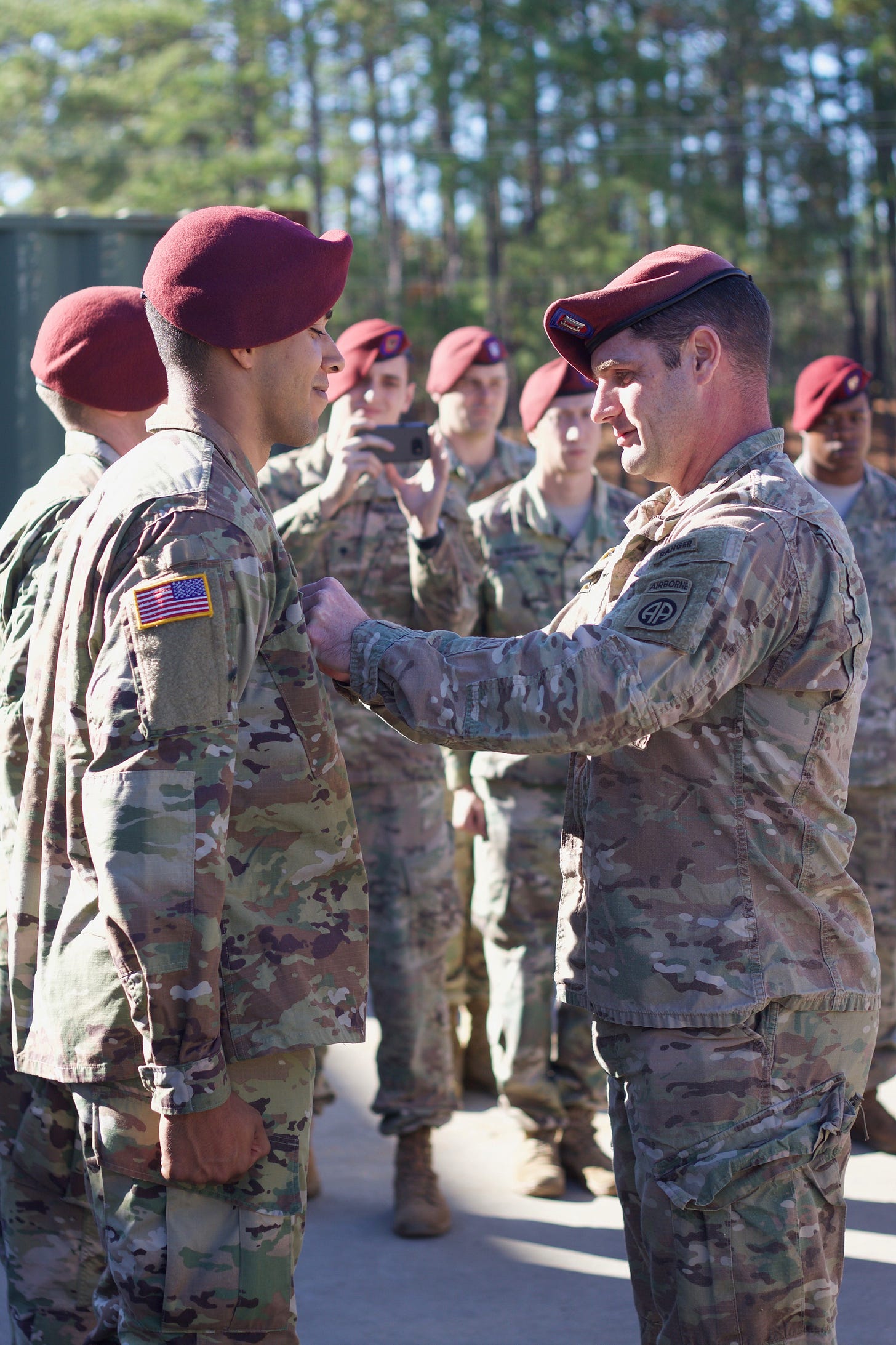
When I was in the Army, I was in the best shape of my life. Preparing for Ranger School does that to you. I graduated from high school at about 185 lbs. After my freshman year of ROTC, I was 195 lbs. I got up to about 207 lbs through my Infantry training and the lead-up to Ranger School. I got to the point where I was running five miles in 35 minutes while being strong enough to handle the heavy, slow movements during missions.
They call it the Army’s elite weight loss program. You come out the other side much leaner than you went in, partly because the program is extraordinarily demanding and partly because they feed you roughly two meals a day while you’re burning an unfathomable amount of calories. I lost twenty pounds in the first twenty-one days. By the end, I had been broken down and rebuilt in ways that went far beyond the physical.
This Substack is reader-supported. To receive new posts and support my work, consider becoming a free or paid subscriber.
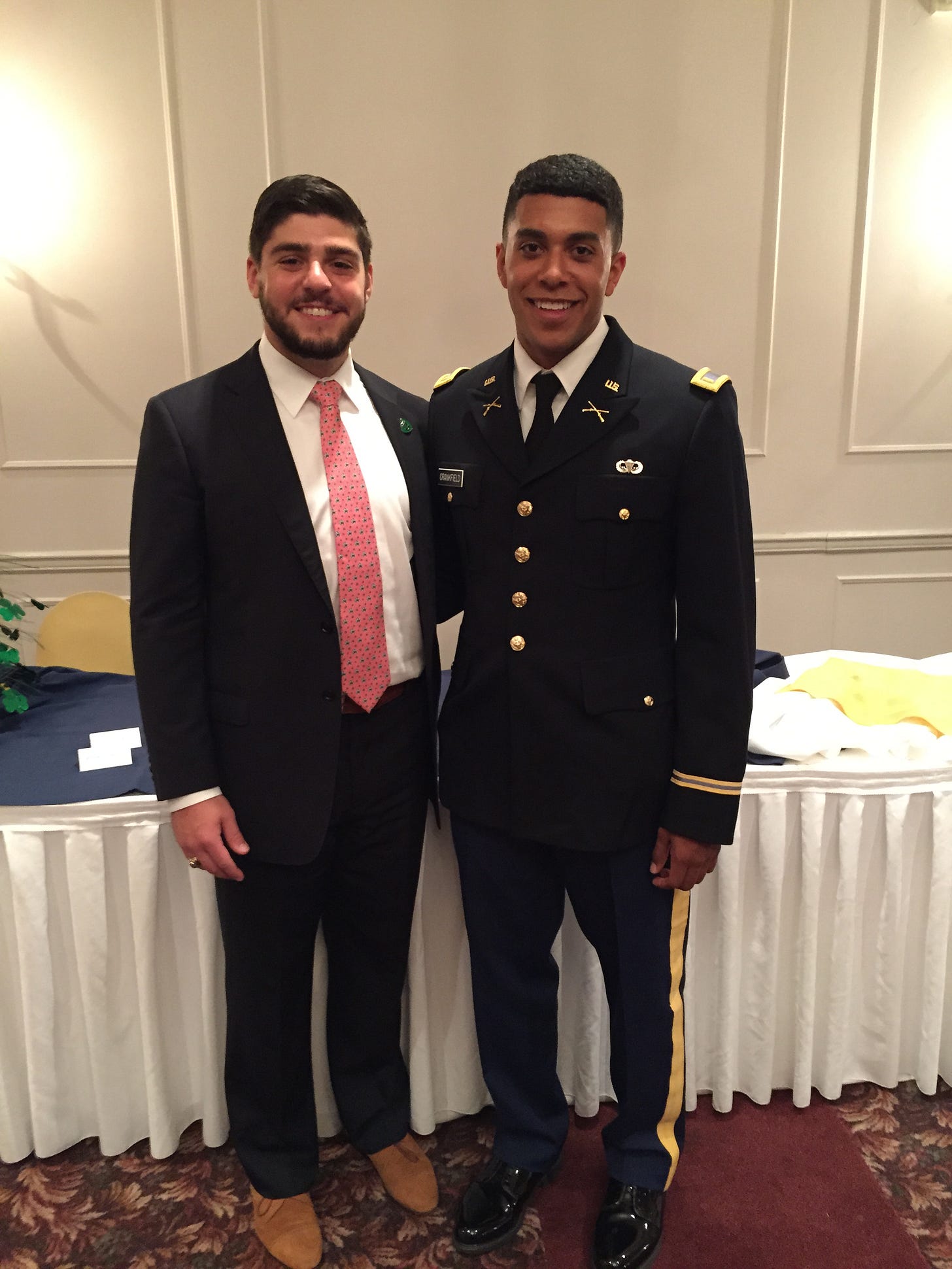
After graduation, I was sent to my first and only assignment at the 82nd Airborne Division in Fort Bragg, North Carolina, where I’d serve as a Platoon Leader. During our deployment to Afghanistan in 2017, I rebuilt my body to the strongest I had ever been. I got my weight up to 225 lbs and was setting personal records on the bench press, deadlift, and squat rack.
Two years later, I transitioned out of the military and into civilian life, and the structure that had kept me disciplined without my having to think about it was suddenly gone. No formation runs. No mandatory PT. No one checking whether you were maintaining standards. Just me, a desk job, and a world full of decisions I had not had to make for myself in years.
My weight has gone up and down nearly every year since. It has fluctuated in ways most don’t pick up on, but enough that I notice. It’s enough that it bothers me. I will build momentum for a few months, get into a real groove, feel like I have finally cracked the code, and then something shifts. My life has been flooded with change post-military: new jobs, new homes, marriage, two babies, promotions at work, you name it. And the fitness habits I thought I had locked in turn out to be more fragile than I believed.
I am telling you this not to confess a failure but to establish a credential. I know exactly what it feels like to start strong and lose all the momentum you’ve built. And because I know that feeling so well, I have spent a lot of time thinking about why it happens and what actually separates those who build lasting habits from those who do not.
What James Clear Got Right
James Clear, the author of Atomic Habits, said something recently on a podcast that was simple yet profound. He said, “A habit must be established before it can be improved. ” And then he said this: the heaviest weight at the gym is the front door.
Both of those sentences are true, and they are worth sitting with.
The first one is a correction to a mistake almost every ambitious person makes. We plan the optimal version before establishing the basic version. We research the perfect workout split before we go to the gym three times in a row. We design the ideal content strategy before we have published ten pieces of anything. We map out the perfect morning routine before we have proven to ourselves that we can get up on time for two weeks running.
Optimization should be a reward for consistency. You ought not do it before you’ve earned it.
The second sentence, about the front door, captures something every person who has ever tried to build a habit already knows intuitively but rarely articulates clearly. The barrier to showing up is almost never the work itself. It is the friction between where you are and where the work happens. It is the gap between the couch and the gym bag. It’s the chasm between the bed and the desk. It’s the intimidating distance that exists between the comfortable and the required.
Clear’s whole system is built around reducing that friction. Make the good behavior easier. Make the bad behavior harder. Stack habits onto existing ones. Start so small that failure becomes almost impossible. It is excellent advice, and it has helped millions of people.
But there is something it does not fully prepare you for. And it is the thing that actually kills most habits.
Nobody Plans for Week Three
The first week of a new habit is almost always fine. You have novelty on your side. The decision is fresh. The motivation is high. You tell people about it, which creates a little social accountability. You feel good about yourself for starting. Week one tends to take care of itself.
Week two is where the first cracks appear. The novelty is wearing off. The motivation has dropped from a ten to maybe a six. You have your first bad day or missed session, and you have to decide whether it is a blip or a trend. Most people who make it this far make it through week two.
Week three is where habits go to die.
By week three, life has reasserted itself. The calendar has filled back up. The kids are sick, or you are sick, or work explodes, or you travel, or you have a brutal week that leaves you with nothing in reserve. And the habit that felt so solid two weeks ago is suddenly just one more thing on a list of things you do not have the energy for.
Here is what almost nobody tells you: this is not a sign that you have failed. It is a sign that you have arrived at the actual test. The early weeks are the entrance exam. Week three is the midterm.
The problem is that most people treat week three as an anomaly. We act like the disruption is the exception and the perfect week is the rule. But life is not made up of perfect weeks. Perfect weeks are the exception. They almost never happen. Disruption, difficulty, and competing demands are the rule. If your habit can only survive ideal conditions, it is not a habit. It is a hobby you do when things are going well.
The Podcast Graveyard
I want to give you a data point that I find both sobering and clarifying.
Approximately 90 percent of podcasts never make it past episode three. Almost half of all shows ever created have been abandoned after just a handful of episodes. Of the podcasts that do make it past the first three episodes, 90 percent of those do not reach episode twenty. Which means that publishing episode twenty-one puts you in the top one percent of all podcasters in the world. One percent. From a bar of twenty-one episodes.
I have published over 400 podcast episodes over almost 6 years.
If you’re reasonable, your response to that shouldn’t be applause or to feel impressed. It should be a prayer that nobody has actually listened to that much of my ramblings. The good news is that most people haven’t. Shout out to the 17 of you who have.
Anyway, I'm not saying that to brag. I say it because those four hundred episodes happened across one of the most turbulent stretches of my life. I recorded episodes while going through a new job. Multiple moves. An engagement. A wedding. The birth of my first child and then my second. The loss of my oldest sister. Seasons of exhaustion where recording felt like the last thing I had the capacity for.
I also recorded episodes that were not very good. Episodes where the audio quality was rough, the content was thin, and the energy was low. I published them anyway. Because I had learned something early on that took me a while to fully internalize: done is better than perfect, and showing up imperfectly is infinitely better than not showing up at all.
The perfect is not just the enemy of the good. It is the most common excuse well-meaning people use to justify quitting.
Playing Hurt vs. Playing Injured
There is a difference between playing hurt and playing injured.
Playing hurt means showing up when conditions are suboptimal. You are tired. You are stressed. Life is not cooperating. The last thing you feel like doing is the thing your habit requires. But you are functional. You are capable. You are choosing comfort over commitment when you stay home, and you know it.
Playing injured means showing up when doing so would actually make things worse. You have the flu, and you are considering going to the gym because you do not want to break your streak. You are running on two hours of sleep and wondering whether skipping your morning routine counts as a failure. These are not the same situations.
When I had the flu recently and my whole family was sick at the same time, I did not go to the gym. That was not weakness. That was wisdom. Your body is not going to benefit from a workout when it is fighting a virus. Your immune system needs the resources you would spend on the barbell. Resting when you are genuinely ill is not an excuse. It is the prudent choice.
But here is the other side of that coin: choosing to stay out late on a Tuesday night and then using exhaustion as a reason to skip your Wednesday morning workout is not the same thing. You made a choice. That choice had a cost. Pretending the cost does not exist is not self-love. It is self-deception.
One of the most clarifying questions I have learned to ask myself in these moments is: Am I actually unable to do this, or am I just unwilling? Those are completely different situations, and they require completely different responses. Inability deserves grace, but unwillingness deserves honesty and accountability.
The goal is not to white-knuckle through every hard moment regardless of your actual condition. The goal is to develop the self-awareness to distinguish between the two. And to stop letting the legitimate excuses cover for the illegitimate ones.
The Habit That Exposes Me Most
I want to get personal for a moment about the habit that exposes the gap between my intentions and my execution more than any other.
My prayer life falls apart when I travel.
At home, I have a rhythm. I know when I pray, where I pray, and roughly what that time looks like. The habit is anchored to a place and a routine that holds it in place. But when I travel, all of those anchors disappear. Travel brings a ton of chaotic unknowns: different time zones, different schedules, dinners that run late, and early-morning flights. Hotel rooms never quite feel like places where prayer happens naturally.
This is not a new problem. In the Army, deployed to Afghanistan, I went weeks between opportunities to attend Mass. In Ranger School, I had Mass once over the course of thirteen weeks. The external structures that support your routines are not always available. Life is hard, and this shouldn’t be news.
And yet, I have not fully solved this. I will be honest about that. But I have gotten better at it. What helps me most is accepting in advance that travel is a disruption and building a minimal version of my prayer habit that is specifically designed for disrupted conditions. It is not the ideal version, but rather the survival version. The version that keeps the thread from breaking entirely, even when the conditions are not perfect.
A decade ago, I would have told you that a five-minute rosary in a hotel room was a failure compared to my normal hour of prayer. Now I understand it as a victory. It is the thing that keeps the habit alive when the habit wants to die. And a habit that is alive, even barely, is much easier to maintain. A dead habit has to be rebuilt from scratch.
The System That Has Kept Me Honest
The single practice that has done more to keep my habits alive than anything else is not a productivity hack or a motivational framework. It is something far simpler and far less glamorous.
I review my goals every day, every week, and every month.
Daily, I look at what I said I was going to do and check it against what I actually did.
Weekly, I do a broader review of the week: where I showed up, where I fell short, and what I am going to do differently.
Monthly, I look at the bigger picture, at whether I am making progress on the things that matter most, and at the gap between where I am and where I said I wanted to be.
This practice is uncomfortable and often exposing. And that's the whole point.
When I skip workouts, the daily review makes me look at the skipped workouts. When my prayer life has fallen off, the weekly review makes me sit with that fact rather than let it quietly become the new normal. When I am drifting from the person I said I wanted to be, the monthly review shows me the drift before it becomes a chasm.
Most people avoid this kind of honest accountability because it requires them to confront failure. But failure that is confronted is failure that can be corrected. Failure that is avoided just compounds quietly in the background until the gap between who you are and who you intended to be is so large it feels insurmountable.
I have failed at a lot of goals over the years. My weight, as I said, has fluctuated in ways that frustrate me. There are habits I have built and lost more than once. There are commitments I have made to myself that I have not kept as fully as I intended. The review practice does not prevent those failures. What it does is force me to own them, learn from them, and get back on track faster than I would otherwise.
The goal is not a perfect record. It is an honest one. And an honest record is what allows you to make real improvements instead of just feeling vaguely bad about where you are.
What Actually Works: A Framework for Getting Past Week Three
First, design your habit around your worst week, not your best. Most people design habits around the version of their life where everything is going well. That version of your life is rare. Design for the version where you are tired, traveling, and overwhelmed, and ask what the minimum viable version of this habit looks like under those conditions. That minimum viable version is your survival protocol. Use it as a baseline.
Second, decide in advance what constitutes a legitimate excuse and what does not. Before you need to make the call under pressure, decide where your lines are. Genuine illness: legitimate. Genuine family emergency: legitimate. Tired because you stayed up too late: not legitimate. Busy because you did not manage your time well: not legitimate. When the moment comes, you will not have to decide. You already decided.
Third, never miss twice. This is the rule that has saved more of my habits than any other. One missed day is a blip. Two missed days are the beginning of a pattern. Three missed days and the habit is on life support. If you miss once, the only thing that matters is what you do next. Show up the following day, even if the session is shorter, messier, and less impressive than you wanted it to be. The streak you are protecting is not the unbroken one. It is the one you always come back to.
Fourth, review honestly and regularly. Daily, weekly, monthly. Make failure visible. Make progress visible. Keep the gap between your intentions and your actions somewhere you have to look at it. The discomfort of that visibility is the mechanism that drives correction.
Fifth, and perhaps most importantly, remember why you started. The habits worth building are not ends in themselves. They are the means by which you become the person you are trying to become. The workout is not the point. The father, the leader, the man of faith, the person of genuine excellence, who is formed by consistent physical discipline, that is the point. When week three is hard, come back to that. Not to motivation. Return to your purpose.
Getting Past the Front Door Is Only the Beginning
James Clear is right. The heaviest weight at the gym is the front door. Getting started is hard, and anything that helps you reduce the friction of beginning is genuinely useful.
But the front door is not the finish line. It is the starting line. And the race that begins on the other side of it is longer, harder, and more demanding than any motivational framework fully prepares you for.
Four hundred episodes in five and a half years. New jobs, new cities, new children, grief, exhaustion, and more imperfect weeks than I can count. The podcast did not survive because conditions were always favorable. It survived because I decided early on that conditions were not the variable. My response to conditions was the variable.
That decision, made once and then made again and again in every hard moment that followed, is the only thing that separates the person who publishes episode four hundred from the person who published episode three and stopped.
Establish the habit first. Survive week three. Play hurt when you have to. Rest when you are injured. Review honestly. Come back when you fall off. And keep coming back.
That is the whole thing. It is not complicated. It is just hard.
Do it anyway.