Seeking Excellence
Politics • Spirituality/Belief • Lifestyle
Why I'm Giving Up People Pleasing For The Month of May (And Maybe You Should Too)
post photo preview

I'm giving up at the end of this month. I know it sounds dramatic, but I've reached a dramatic point in my life.

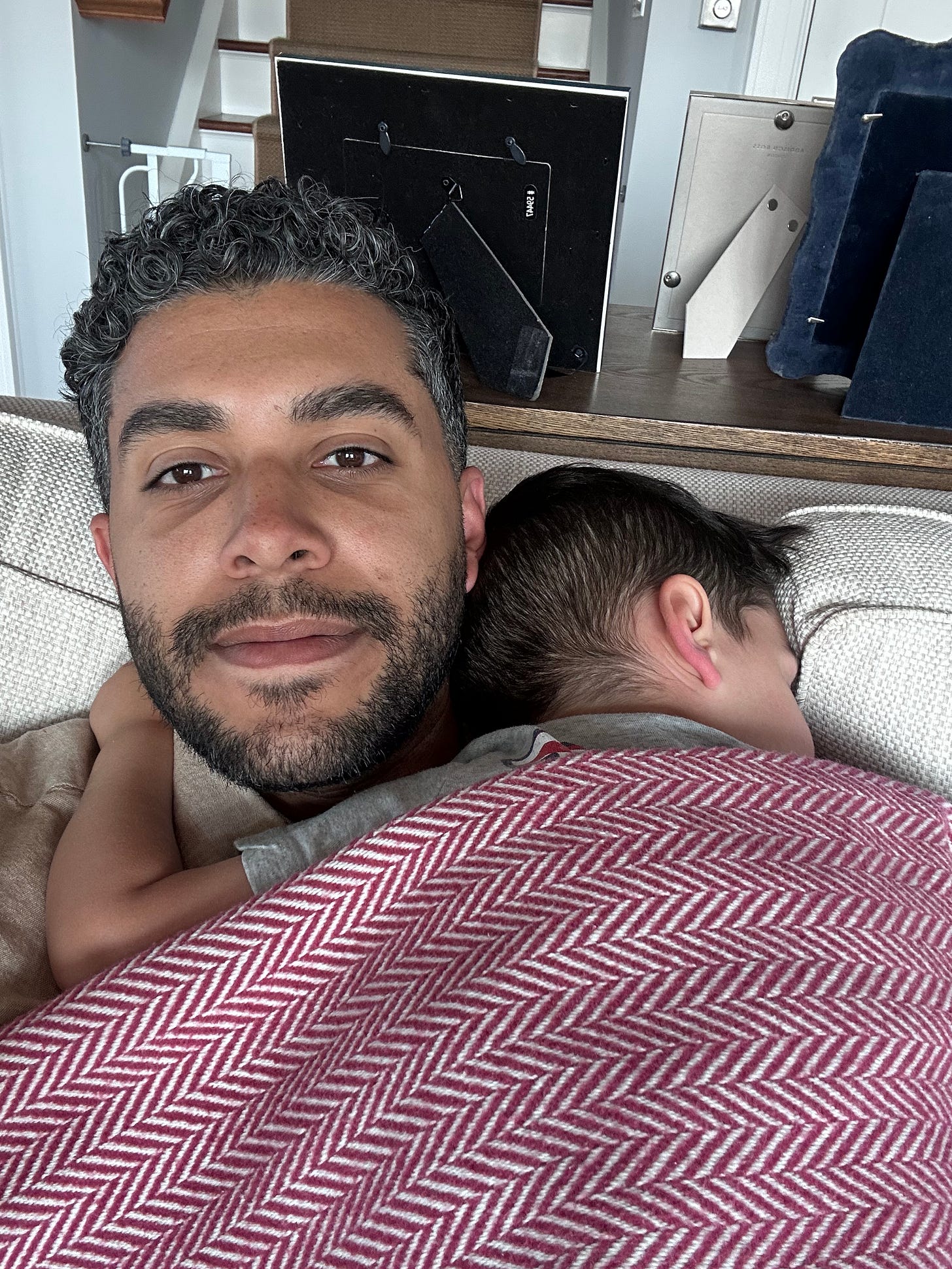
It's been a tough year so far. Work has been very demanding, my son has been battling whooping cough for some 75+ days now, we have a teething baby, and we're still struggling to build community in our new city.

 

I started the year off strong, filled with that optimism and energy that hits every January 1st. My plan was to rejoin the 5am club, go deeper in my prayer life, and finally lose the weight I gained some five years ago when I tore my left achilles.

It was a great plan that got almost immediately upended. I got promoted at work, and was promptly told I needed to hire 7 new people. This meant Q1 went from being status quo to total chaos by the end of the first Monday of the new year. On top of that, several work trips got added to my schedule.

Whooping cough, along with stomach bugs and maybe the flu(?), also absolutely destroyed my agenda. I got so exhausted at one point in March that I thought it was borderline imprudent/illegal for me to be driving.

Life is hard - but that's honestly not the core of the issue when it comes to my seriously increased stress levels and unhappiness.


The truth is that I've let the secondary things drain time away from the primary things. I've failed to keep the main things the main things.

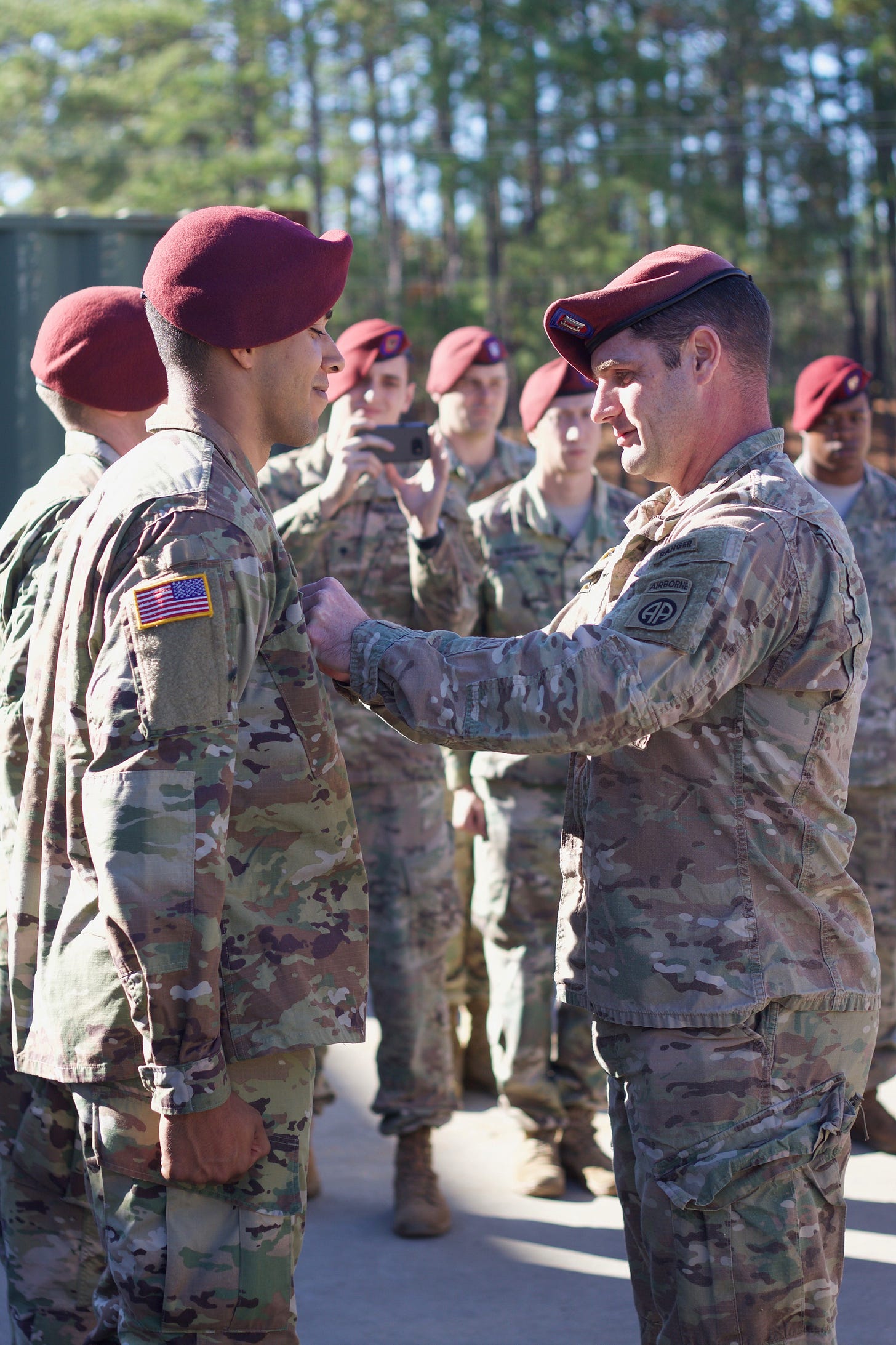
I've never considered myself too much of a people pleaser. How could I be one, when I so frequently (and sometimes intentionally) piss people off? I’m intentionally not nice. I aim to be kind, but I am not someone who walks around afraid to offend people. I still have that combination of East Coast ruggedness topped off with the US Army Infantry’s approach to dealing with people.

When the topic of people pleasing has come up in the past, I usually tune out. I don’t really care about being liked, or so I thought. After all, I am the man who does and says the hard things. And I am genuinely at peace knowing that there are people at the parish, at work, and online who dislike me for my allegiance to excellence and the truth.

But trying to be liked isn't the only form of people pleasing. I've learned that I am very defensive around my reputation in some ways. I've become a yes man and I hadn't even noticed in until now. I may think that I don’t care if people don’t like me, but that’s only true in certain circumstances. Let me explain.

Every year I set out a goal to say "no" more often. I simply get asked to do way too many things. This happens all the time in life, and especially within the Church. The same volunteers run every event. You help out at youth group, then you’re asked to coach basketball, then help with OCIA, then speak at the school and the parish, then run a men’s group — that’s the real story of my experience at our last parish.

The worst part is that every year I get better at saying no, but the demand increases as well. So while I'm accumulating reps of "no" at exponential rates, the requests are also growing at a number that outpaces my skill in rejection. And therefore, my busyness increases rather than decreases.

And nothing stresses me out more than spending time doing things that aren’t the primary things I know I am supposed to be doing. But apparently, I’m willing to misalign my priorities for the sake of pleasing others, even strangers.


I seem to really be bothered by the idea of people thinking any of the following:

-I am unwilling to make time for them

-I am incapable of doing more than I currently do

-I am unwilling to help them (or think I’m too good/important to help them)

But the reality is that, while the internet can do many great things, it also makes us way over connected and exposed. Speakers in the past never had 20 follow up DMs from people wanting more of their time. Back in the day, when people applied at a company in high demand, they just had to submit an application and try networking at events or through relationships. There was no LinkedIn and requests for 30 minute/phone zoom calls to “learn how to stand out”.

With all of these things, I am simply overwhelmed. Maybe it is that I have a lower capacity than I’d like to imagine. Perhaps I am selfish. Or maybe I’m just not managing my time well. I’m honestly not sure. I just know I’m stressed out, under-prayed, and overweight. And I’m tired of all of that.

So I'm taking a sabbatical this month. I'm going to focus on three main things outside of work:
1) my faith
2) my family
3) my fitness and my health

Every yes I give to a request for 30 minutes of my time to a stranger takes away 30 minutes of time I could spend in prayer, at the gym, or playing with my kids.

And frankly, I'm tired of watching my goals, purpose, and my happiness fade away to please people I've never met, will never meet, and oftentimes, can't really even help.

It feels selfish to say these things. It feels even more selfish to post it on the internet. But I want to encourage others out there fighting this same fight, because I know I'm not alone. I have friends, coworkers, and internet peers who I know are doing the same things. The burnout is real, even though we try so very hard to ignore it.
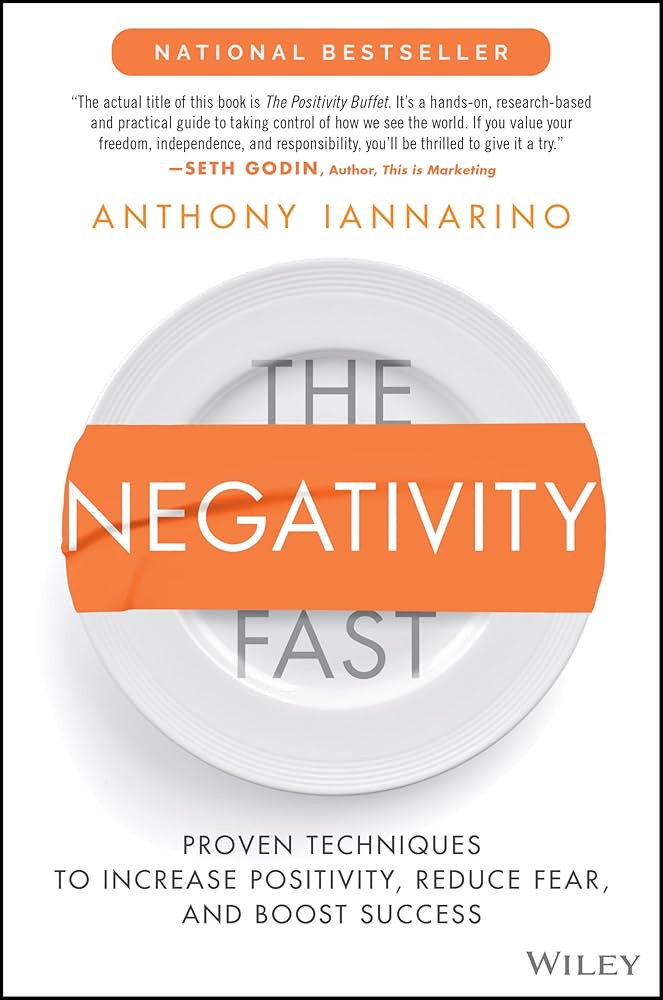
The Negativity Fast: Proven Techniques to Increase Positivity, Reduce Fear,and Boost Success: Iannarino, Anthony: 9781119985884: Amazon.com: Books
 

Here’s the full detail of my plan to reset my life in the month of May. I am primarily fasting from three things:

  1. Negativity - I recently read the book The Negativity Fast by Anthony Iannarino. It’s a secular book that is filled with many profoundly basic insights to create a more positive life. One of the key ingredients of that is what leads to number 2.

  2. Social media - specifically Instagram and X. This is pretty self-explanatory, but these apps generally suck and make my life worse.

  3. Extra-curricular activities - this is anything outside my primary grades, aka the six pillars of excellence. That means anything that doesn’t contribute to the growth of my mind, body, soul, career, money, or key relationships is a no go if I do not sincerely want to do it. That last part is the important one. I can still have fun. I am just releasing the false sense of obligation to do things I don’t want to do in place of things I ought to do.

So to my beloved internet peeps - no, I do not have time in May to chat. I don't have time to connect. I don't have time to review things you'd like me to review. I'll (probably) be back in June - and I will still be posting here on Substack and on LinkedIn. I’ll still have podcasts dropping here and there. But no random phone calls or zoom chats.

I need to talk with God. I need to call my grandparents. And I need to make it to the gym and home in time for dinner with my wife and kids. I hope you’ll understand, but it’s okay if you don’t.

For these 31 days, I'm going to reorder my life and put first things first. I'm sorry that you're second, but I need Jesus, good health, and my family more than I want to make you happy. And it's time my calendar reflected that reality.


community logo
Join the Seeking Excellence Community
To read more articles like this, sign up and join my community today
0
What else you may like…
Videos
Posts
Articles
The Santa debate!

Is Promoting Santa a Lie? Or Is It Innocent Fun?

00:14:22
"My daughter was really offended by your talk last night." 😅

"My daughter was really offended by your talk last night."

Someone dropped this bomb on me unexpectedly after daily mass this past summer. Although I can sometimes be a bit dicey and bold in my presentations, I was pretty shocked to hear it.

I had given a talk to middle schoolers the night prior on how our faith can help us in managing sadness, anxiety, and stress.

After mass the next day, I was walking in the convention center and was stopped by a woman who asked if I spoke to the middle schoolers the night prior. I responded in the affirmative.

"My daughter was really offended by your talk."

In a flash, I try to recall what I said that might have been the trigger for offense. Nothing came to mind. So I inquired, "Interesting. What was it that bothered her?"

"She said that you told the kids that if you experience anxiety, you can essentially pray it all away. And she has been clinically diagnosed with severe anxiety so it upset her."

"AH okay, I see the misunderstanding here" I ...

00:56:59
I am a Charlie Kirk, not a George Floyd

Over the last few days, I've taken a lot of time to reflect on the importance of this moment for our nation and for the Church.

Here are further reflections on these recent events and what I think we ought to do from here.

00:36:22
Acts of Faith: Bishop Johnson on Saying Yes to God

In this first-ever Seeking Excellence episode with a BISHOP, Bishop James Johnson joins me for a powerful conversation on vocation, leadership, Catholic schools, generosity, and what it really means to trust God.

We talk about his journey from engineer to priest to bishop, the challenges of leading a diocese, why Catholic education matters, and how giving reveals what we truly believe.

Listen here: https://open.spotify.com/episode/00wfPWk0OWnFtNePMkYTne?si=dUIZqUcoSl6i3WdiHsHsnw

Happy Easter!

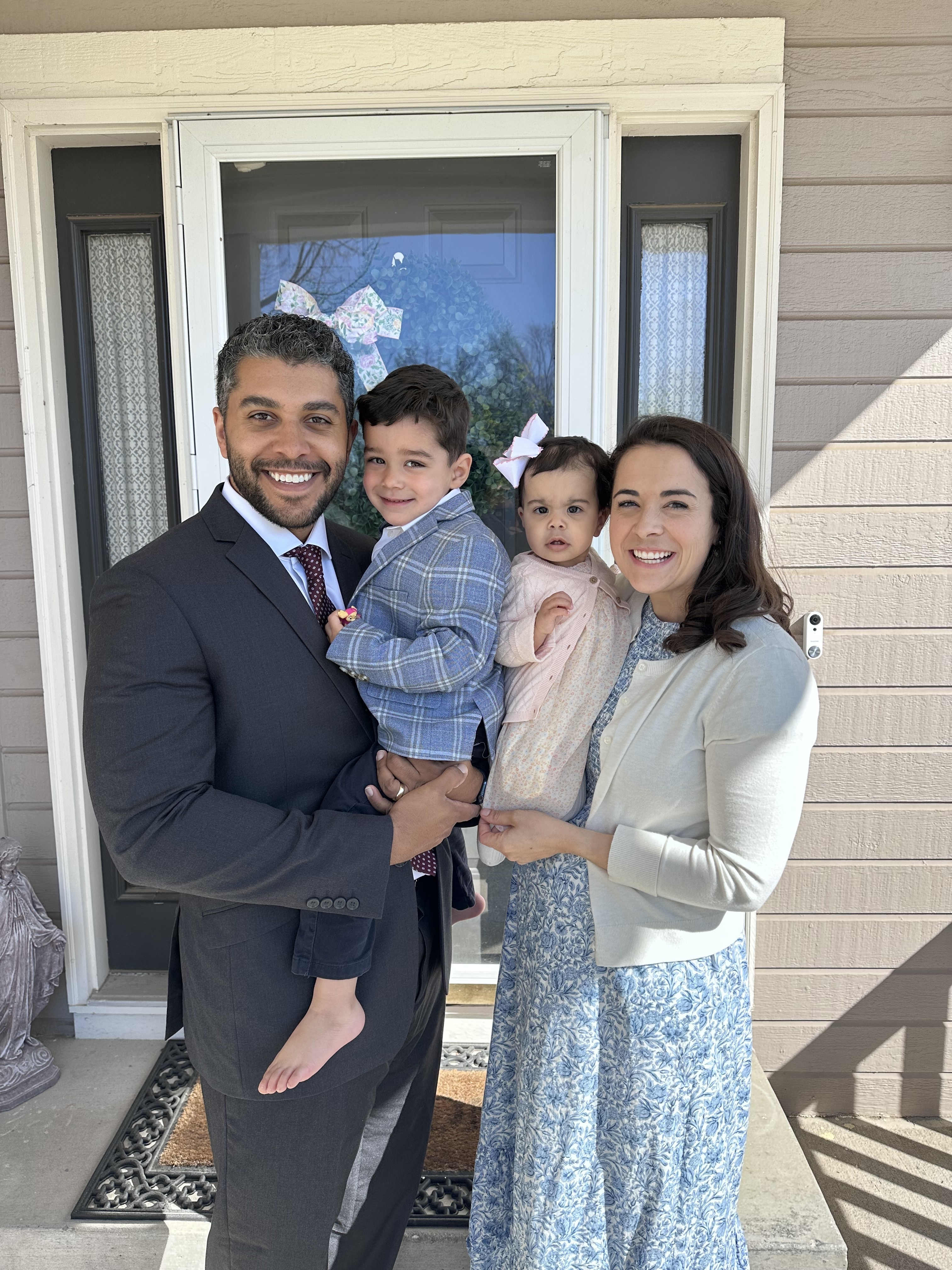
Wishing you a happy Easter from the Crankfields!

post photo preview
You Were Not Made To Do This Life ALone

25% of men ages 15-35 reported feeling serious loneliness the day before being surveyed. That is one in four men. And if you are married with kids, it does not automatically get better.

In this recorded livestream, I break down why the loneliness epidemic is hitting men so hard, why most of us are making it worse without realizing it, and what it actually takes to build real friendships as a busy husband and father.

If you have been feeling isolated, like you do not have the kind of friendships that actually sharpen you, this one is for you.

Watch here:

The Call of Duty Delusion: Why Responsibility Is What Makes You Fully Alive

There is a lie spreading through our culture that sounds reasonable enough on the surface. It goes something like this: less sacrifice and less suffering = more happiness. 

I got a message recently from a man in his early thirties. He told me he did not have kids yet, but he was an uncle. He repeated the belief I’ve heard many times – being an aunt or uncle is actually superior. Have a good time with the nieces and nephews then send them back to their parents for the hard stuff, like discipline, baths, and bedtime routines. You get the fun without the responsibility. He seemed genuinely pleased with himself for having figured this out.

I did not respond with anger. I responded with something closer to sadness. Because I recognized in his message something I have seen in dozens of conversations with men over the years: a man who has convinced himself that the absence of burden is the presence of fulfillment. That opting out of hard things is the same as winning. That fun and ease are superior to purpose.

They are not. And deep down, I think he already knows that.

The Call of Duty Problem

When I was an infantry officer in the United States Army, I had a nephew who was obsessed with Call of Duty. He had logged hundreds of hours in virtual combat. He knew the maps, the weapons, the tactics. He could play for hours on end and hoped to become a pro one day.

He genuinely seemed to believe that his virtual experience bore some meaningful resemblance to my real-life military training.

It did not. And I do not say that to be cruel. I say it because the gap between simulation and reality is precisely the gap between the man who carries responsibility and the man who watches from a comfortable distance. One of them is being formed by the experience. The other is being entertained by it.

This is the Call of Duty problem. We have built an entire culture that applauds taking the easy route, and even goes so far as to claim it is equal or superior to the road less traveled. We want the experience of things without the consequences, such is the case with rampant fornication and abortion. We want things to be given to us for free and for our debts to be paid by others. We want to normalize co-parenting – another word for part-time parenting that still allows for plenty of “me time”. We want marriage but with the opportunity for divorce without cause if we feel it doesn’t benefit us any longer. 

Being a great uncle is a wonderful thing. I mean that genuinely. Uncles matter. They have a unique role in a child's life, and they can do genuine good. But it is not fatherhood. Just as playing Call of Duty is not war. And living together before marriage is not the covenant of matrimony. These are not equivalent experiences with the same transformative power. They are simulations. And simulations, by definition, cannot do what the real thing does to you.

The Data on a Generation Opting Out

This is not just anecdotal. The data on young men in America right now is sobering.

As of August 2024, labor force participation among men aged 25 to 34 had fallen to 89 percent, representing over 700,000 fewer young men working compared to 2004 levels. One in three adults between the ages of 18 and 34 now lives with at least one parent, the highest rate in over a century. Twenty percent of men in the 25 to 34 age range were still living at home in 2023, compared to only 12 percent of women. The median age at first marriage for men has climbed to 29, the highest in recorded history.

Richard Reeves, whose book Of Boys and Men documents this crisis in exhaustive detail, put it plainly when he said that many young men today feel "not sure that they are needed or that they are going to be needed by their families, by their communities, by society." Leonard Sax's Boys Adrift makes a similar case, documenting the specific ways our culture has systematically removed the incentives and rites of passage that historically pulled boys toward manhood.

Jordan Peterson's extraordinary reach, with millions of young men consuming his lectures and interviews, tells you something important. It tells you that young men are starving for someone to look them in the eye and say: Your life can mean something. You are capable of more than this. Pick up your cross and carry it.

They respond to that message not because it is new, but because it is true. And because almost nobody else is saying it to them anymore.

What Responsibility Actually Does to You

I want to be specific about something, because I think it gets lost in these conversations. The argument for responsibility is not that suffering is good in itself. It is not that difficulty is something to be pursued for its own sake. The argument is simpler and more powerful than that.

Responsibility forms you in ways that nothing else can.

I am proud of a lot of things in my life. But when I think about what has actually shaped my character, strengthened my identity, and produced in me something I genuinely respect, the list is not made up of fun experiences. It is made up of hard ones.

Earning my Ranger Tab was not transformative because Ranger School was enjoyable. It was a life-changing experience because it nearly broke me, and I kept going anyway. Ranger School stripped everything comfortable away: food, sleep, warmth, and any illusion I had about who I was when shit hit the fan. What was left when they were done was something more real than what went in. It was both humbling and empowering. It exposed both serious cracks in the armor of my mind and an inner depth I didn’t know was there. 

Fatherhood is doing the same thing to me right now, just more slowly and with more temper tantrums. Every time I come home exhausted and choose to engage instead of check out, something is being built in me. Every time I hold the line with my son, when letting it go would be easier, I am becoming more of the man I want him to grow up to be. Every hard conversation with my wife, every budget review, every early morning, every moment of choosing my family over my comfort, these things are forming me.

You cannot get that from being an uncle. You cannot get it from a video game. You cannot get it from a relationship that costs you nothing because you have structured it that way. 

The growth cannot be separated from the sacrifice. 

The Cohabitation Trap and the Broader Pattern

The uncle mentality shows up in more places than just fatherhood. It is the same logic that drives the cohabitation epidemic.

Living together before marriage is sold as a trial run. A way to get the experience without the commitment. A sensible, modern approach to something that used to require you to actually decide. But decades of research tell a different story. Couples who cohabitate before marriage have consistently higher rates of divorce than those who do not. The relationship that costs you nothing to leave is the relationship you treat like it costs nothing to lose.

This is not an accident. It is a feature of how human beings actually work. We rise to the level of our commitments. When the commitment is absolute, something in us becomes capable of meeting it. When the exit door is always propped open, some part of us never fully walks through the entrance.

The same pattern plays out in careers, in communities, in churches. The person who volunteers for the hard assignment grows. The person who always finds a reason to stay on the sidelines stays exactly where they are. The parishioner who commits to a parish, who sees its problems as their problems, who gives their time and money and energy to something larger than themselves, that person is being shaped. The one who church-hops to avoid obligation remains a spiritual tourist and misses the opportunity to experience true belonging and community.

Responsibility and commitment are the foundations. Sacrifice is the natural fruit of those two things. And fulfillment is the ultimate end that can’t be found without a powerful combination of those three. 

The Leadership Call That Most People Ignore

I want to broaden this beyond masculinity for a moment, because I think the principle applies to every person reading this.

Every one of us is called to lead somewhere. In your home. In your workplace. In your parish or community. Leadership is not a title. It is a decision to take responsibility for something beyond yourself and to accept the weight that comes with it.

Most people never fully answer that call. Not because they lack the capacity, but because answering it is uncomfortable. It requires you to care about outcomes you do not fully control. To have hard conversations you would rather avoid. To be present when absence would be easier. To hold a standard when lowering it would buy you peace.

The person who answers the call anyway, who steps into the difficulty rather than engineering their life around avoiding it, that person becomes someone. They develop the kind of character that can only be forged under load. And they discover something that the person on the sidelines never will: that the weight they were afraid of is actually what they were made for.

This is not a modern insight. It is ancient. The greatest spiritual traditions in human history have understood that suffering embraced for a worthy purpose is not merely tolerable. It is sanctifying. It makes you more fully human. It strips away the parts of you that are soft in the wrong ways and builds something harder and truer in their place.

Jesus did not model a life of comfort and self-protection. He modeled a life of radical responsibility for others, freely taken on at enormous personal cost and fueled entirely by love. Whatever your faith tradition, the pattern is clear. The people who have lived most fully have almost universally been those who gave themselves most fully.

Grow Where You Are Planted

I want to close with something important, because I do not want this to land as a condemnation of anyone who is not yet a parent, or who is unmarried, or who is in a season of life that looks different from mine. There are aunts and uncles out there who make great sacrifices for their families. There are boyfriends and girlfriends who really dedicate themselves to working hard to serve their significant other, as Emily did for me when I tore my achilles while we were dating. 

The call to responsibility is not a call to a specific life arrangement. It is a call to a posture. To show up fully wherever you are. To stop treating the absence of obligation as the presence of freedom. To find the thing in your current life that is asking something of you and to give it everything you have.

If you are an uncle, be the best uncle those kids have ever seen. Sacrifice for them. Show up consistently. Be the man in their life who demonstrates what it looks like to be someone of character. That is a real calling, and it is worth everything you bring to it.

If you are single, stop treating that season as a waiting room. Your life is happening right now. Your church needs you. Your community needs you. The people around you need a leader who is present, invested, and willing to carry something for them. Be that person.

If you are in a marriage that is hard, do not engineer your way out of the difficulty. Grow into it. The hardest seasons of marriage are often the ones that produce the deepest intimacy, if you refuse to quit.

The point is not that any one path is the only path. The point is that wherever you are, there is a version of your life that requires more of you than you are currently giving. And the gap between what you are giving and what you are capable of is exactly the space where the best version of you is waiting to be forged.

You Were Not Made for the Sidelines

The man who messaged me about being an uncle is not a bad person. He is a person who has been told, by a culture that is deeply confused about what constitutes a good life, that minimizing his exposure to difficulty is a form of wisdom. That fun without responsibility is the better way.

It is not. It is the lesser thing dressed up in the language of freedom.

Real freedom is not the absence of obligation. It is the capacity to choose something worthy and give yourself to it completely. That kind of freedom is only available to people who are willing to carry something heavy. And the people who carry it, who do not set it down when it gets hard, who keep showing up for the people and the purposes that depend on them, those are the people who, at the end of their lives, will look back and recognize that they were fully alive.

The ranger tab is not the point. Fatherhood is not the point. The marriage is not the point.

The point is the person you become when you refuse to take the easy way out. 

That person is worth becoming. And you already have everything you need to start.

Where in your life are you currently choosing the simulation over the real thing? Drop your thoughts in the comments.


Read full Article
post photo preview
Be Cautiously Optimistic After Easter
What the Catholic Conversion Boom Really means

I want you to imagine you’re playing in a basketball game.

You’re on the bench getting some rest, but your team is really heating up. A deep three goes in, followed by a turnover, and a few more quick buckets.

You do some quick math and realize your team just put together a 12-2 run in the last 3-4 minutes of the game. It’s an away game and the home crowd is quieter than it’s been all game. Your opponents call a timeout to regroup.

Your team is fired up, yelling and high-fiving on their way into the team huddle, and rightfully so. It seems like the adjustments made at halftime are really coming together.

You clap. You cheer. You ride the wave of the moment because it is real and it is worth celebrating.

And then you look at the scoreboard. You are still down 46 points. This reality check hits you like a brick to the face. It sobers you up a bit. You realize that momentum is on your side, but you all still have a long way to go.

That is the Catholic Church in America in April of 2026.

This Easter saw numbers that should genuinely excite every Catholic in this country. The Archdiocese of Newark welcomed 1,701 people into the Church, a 72% increase since 2023. Los Angeles welcomed over 8,500. Boston went from an average of 250 to 300 converts per year to over 680. The Archdiocese of Oklahoma City was expecting a 57% increase in unbaptized people becoming Catholic. According to our CEO at Hallow, Alex Jones, more than 80% of dioceses are seeing an average year-over-year growth of 38% in OCIA enrollment. The University of Illinois campus alone went from 50 students entering the Church last Easter to 120 this year.

This is a genuine 12-to-2 run. The momentum is real. The Holy Spirit is moving in ways that are measurable, documented, and undeniable.

And yet, we are still down 46 points. But stay with me. This article is meant to encourage and challenge you, not just rain on your Easter parade.

What the Scoreboard Actually Shows

Here is the honest picture of where the Church stands in America right now, because I think it is important to name it clearly before we talk about what to do.

For every one person who converts to Catholicism, somewhere between six and ten cradle Catholics leave the Church. The General Social Survey has been tracking this for fifty years. In 1973, 84% of those raised Catholic still identified as Catholic as adults. By 2022, that number had fallen to 62%. One out of every three people raised Catholic has disaffiliated themselves from the Church.

Weekly Mass attendance among cradle Catholics tells an even starker story. In 1973, about 34% of those raised Catholic were still attending Mass weekly as adults. By 2002, it had dropped to 20%. By 2022, it had fallen to 11%. We are losing nine out of ten cradle Catholics when it comes to active practice of the faith.

The conversion numbers we are celebrating this Easter, as genuinely exciting as they are, represent a rebound from a long decline. From 2000 to 2019, the average American diocese saw a 41% decrease in the number of adults entering the Church. What we are witnessing now is a reversal of that trend, not yet a net gain against the broader losses the Church has sustained over decades.

I am not saying this to be a Grinch during this beautiful Easter season. I am saying it because the team that is down 46 points does not get to coast after a 12 to 2 run. It has to keep pressing, and it needs to be strategic about it. The naive optimist says, "Things are going well; let us enjoy this.” The serious leader says, things are moving in the right direction, now let us figure out what we have to do next.

Why Some Parishes Have Dozens and Others Have One

Here is a question worth asking out loud: given the extraordinary momentum we are seeing in some parts of the Church, why are so many parishes still bringing in only one or two converts a year?

My wife and I volunteered for two years in OCIA at Our Lady of Lourdes in Denver. It is a parish known throughout the Archdiocese for its conversion numbers. Dozens every year, consistently, long before this current wave of interest in the faith made headlines. We were there to witness it firsthand, and what we witnessed taught us something important.

Almost every story we heard from people entering the Church sounded like this:

"My sister invited me.”

“My boyfriend is Catholic and started bringing me here.”

“A coworker kept inviting me to events at the parish, and I finally showed up one Sunday.”

“A friend took me to adoration, and I had an experience I could not explain.”

The difference between a parish that brings in fifty converts a year and a parish that brings in one is almost never the quality of the OCIA program. It is the culture of the parishioners. It is whether the people in the pews see evangelization as something the priest does or as something every baptized Catholic is commissioned to do. It is whether Sunday Mass is the end of their Catholic week or the center of a Catholic life that overflows into their relationships, their conversations, and their invitations.

There are parishes in Denver that sit full on Sunday mornings and have brought in one or two converts in years. The same city. Similar demographics. Vastly different outcomes. The difference is not the zip code. It is the intentionality of the people inside the building.

Every parish that has not had a meaningful number of conversions in years owes itself an honest conversation about why. Not a defensive one, an honest one. Because, as Pope Francis said, we are supposed to be a field hospital for sinners, not a museum for saints. If people are not finding their way in, it is worth asking whether the door feels open to those who are exploring or new to the faith.

We Have a Bigger Retention Problem Than a Conversion Problem

I want to address something that rarely gets mentioned in the excitement around conversion numbers, because I think it is the most important strategic challenge the Church faces right now.

Getting people in is only the beginning. Keeping them is the harder and equally urgent work.

The anecdotal reports from OCIA directors around the country suggest that somewhere between 50% and as many as 90% of converts stop attending Mass regularly within a year of their initiation. CARA's broader research paints a somewhat more encouraging picture, suggesting that around 84% of OCIA converts still identify as Catholic years later. But identification is a low bar. The harder question is whether they are practicing, growing, and passing the faith on to their children.

Megachurches chase numbers for numbers’ sake. That is not our model, and it should never become our model. Our theology holds that the sacraments confer grace, that the Eucharist is the source and summit of the Christian life, that membership in the Body of Christ is not a lifestyle choice but an ontological reality with eternal consequences. If we welcome people into that reality and then fail to form them in it, we have not served them. We have given them a certificate and sent them on their way.

What keeps converts in the Church? Overwhelmingly, the same thing that brought them in. Relationship. A sponsor who stayed in contact after Holy Saturday. A community that made room for them. A parish that treated the period after Easter as the beginning of formation rather than the end of the program. The Easter season is not supposed to be an afterthought. It is meant to be the continuation of a lifelong journey in which the Church is committed to walking alongside its newest members.

If your parish welcomed a dozen people into the Church last Saturday and has no plan for what to do with them between now and Pentecost, that is the most important problem to solve before next Easter.

One of the biggest shortcomings of many formation programs is around the spiritual pillar of prayer. The need for relationship in the ongoing practice of the faith mirrors the primary symbol of our faith: the cross. It must go both vertically and horizontally. We have a real human need to develop intimacy with God and real friendship with one another. The best parishes and the best spiritual leaders teach us how to do both while also cultivating an environment and culture that facilitates transformational relationships upward and outward.

The Leaky Bucket: Catholic Education and the Children We Are Losing

There is no point in celebrating the water flowing in if we have not fixed the holes in the bucket.

The data on cradle Catholics leaving the faith is sobering in its timing. Nearly half of those who leave Catholicism do so before they turn 18. Another 30% leave between 18 and 23. That means roughly 80% of the Catholics we lose, we lose before they reach age 24. The attrition is happening in our schools, in our religious education programs, and in our homes. And it is happening at a rate that dwarfs our current conversion gains.

This is where the Church's most important work is happening and where, too often, we are losing the most ground. Catholic schools and religious education programs that do not form genuinely intentional disciples, that teach the faith as a set of facts to memorize rather than a relationship to enter, are not keeping our children. They are giving them a credential and a reason to check out.

What the research consistently shows is that the young Catholics who stay are the ones who had a genuine encounter with Jesus Christ, not just exposure to Catholic content. They had an adult in their life, a parent, a teacher, a youth minister, who lived the faith visibly and authentically in front of them. They were given something to sacrifice for rather than just something to sit through.

This is not a program problem. It is a discipleship problem. And it starts in the home long before it reaches the classroom.

The Question of Openness to Life

If we want the Church to grow, Catholics need to have more children.

The culture has done an extraordinarily effective job of convincing Catholics, including many practicing, well-intentioned Catholics, that two children is the responsible number. That being said, beyond two, you are being reckless, burdening the environment, or simply failing to prioritize your own comfort and career. The Church's actual teaching on openness to life is treated even within many Catholic families as an optional addendum rather than a central and countercultural command.

I am not arguing that every Catholic family must have ten children or that there are never serious reasons to space or limit births. The Church has never said that, and neither have I. What I am saying is that the casual cultural default of stopping at one or two, without any serious prayer or discernment, without any real engagement with what the Church actually teaches about the gift of life, is something that deserves to be named and examined.

I reflect back to my experience in a Catholic grade school in the early 2000s and remember seeing the families with 4-5 children as the “big families”. Most of my closest friends, and I’m talking 80-90%, were from families with 1-2 children. The adventurous parents dared to have 3. And wouldn’t you know it, the same culture that had a closed-mindedness on children also had immense flexibility on divorce. And the fruits of these households are a very low % of children (and their parents) practicing the faith as adults.

Every child raised in a faithful Catholic home is a missionary in the next generation. The demographic reality of the Church in America is inseparable from the question of whether Catholic families are open to the life God may be calling them to receive.

The Challenge: Stop Watching the Run and Get in the Game

I want to close with something direct, because I think the Church's greatest structural weakness right now is not a lack of enthusiasm. It is a surplus of spectators.

Passive Catholics are not going to win this. They never have. The parishes producing dozens of converts are not doing it because they have a better building or a more dynamic pastor (although this does help). They are doing it because the people in the pews have decided that evangelization is their job too. They invite people. They bring friends to events. They make room at their dinner tables and in their lives for people who are searching. They volunteer for OCIA. They sponsor converts and stay in contact after Easter. They give their time and their money to a mission they actually believe in.

The momentum we are riding right now is a gift. It is the work of the Holy Spirit, and it is real. But momentum without strategy dissipates. A 12-to-2 run means nothing if the team calls it a win and heads to the locker room.

Here is what I am asking you to do. Pick one thing from this list and commit to it before Pentecost:

Volunteer for your parish's OCIA program next year. Contact your director now, before you forget. The people who walked into the Easter Vigil as strangers and left as Catholics needed someone to walk the journey with them. Be that person for someone next year.

Invite someone. Not to a debate about Catholicism. Not to a lecture on doctrine. Just to Mass. Just to an event. Just to something that opens a door. Most of the people who entered the Church at Easter this weekend did so because someone who loved them extended a simple invitation.

Commit to your parish. Not just Sunday Mass. One additional commitment. A ministry. A volunteer role. Something that roots you in a community deeply enough that you begin to see its needs as your needs.

Engage actively with your children's formation. Not just driving them to religious ed. Praying with them at home. Talking about the faith around the dinner table. Living it visibly enough for them to see what it looks like to take it seriously.

The scoreboard is real. The deficit is real. But so is the run we are on. And teams that are down 46 points with genuine momentum do not quit. They push. They organize. They get strategic. And sometimes, against every expectation, they win.

What is one thing you are committing to this Easter season to grow the Church in your community? Drop it in the comments.

Read full Article
Father, Not Friend

Gentle parenting is everywhere right now. It fills Instagram feeds, dominates parenting podcasts, and has become the default philosophy for a generation of well-meaning mothers and fathers who want to do better than their own parents did. At its core, the movement emphasizes emotional attunement, empathy, and explaining your reasoning to your children rather than simply demanding obedience.

And I want to be fair: some of that is genuinely good. Connection matters. Emotional intelligence matters. Treating your children as human beings worthy of explanation and respect matters. I do not dismiss any of that.

But taken to its logical extreme, gentle parenting produces something I find deeply troubling: children who have never truly been told no, who have never experienced a consequence they could not negotiate or emotionally outlast, who have been so carefully protected from discomfort that they have never developed the internal capacity to endure it.

I know what that looks like from the inside. Because I was that kid.

What Too Much Freedom Actually Looks Like

My father was not a bad man. But he was an absent one, emotionally if not always physically. He never asked about my grades. He never inquired about my friends. He never wanted to know what I was doing or where I was going. And when I got in trouble, which I did frequently during my first two years of high school, the consequences were almost nonexistent. I would come home having collected another detention, another suspension, and the response was barely a shrug.

Part of the reason I started smoking weed and drinking at 14 was simply that nobody was watching. My parents were too busy working six days a week to enforce a standard. The boundaries that should have been there were not. And nature, as it always does, filled that vacuum. In my case, it filled it with exactly the kind of life I did not want.

I have shared before that at 15, I hit rock bottom. I was on the verge of selling drugs. I had given up basketball, one of the great loves of my life. I was living a double life, seemingly happy on the outside and completely empty on the inside. And when I look back and trace the roots of how I got there, one of the clearest threads is this: I had too much freedom and too few consequences for far too long.

My father's version of parenting lacked a philosophical foundation. It was rooted in absence and indifference. But the result is not entirely different from what you see when parents are so committed to never making their child uncomfortable that they abandon the responsibility to form them. A child without consistent discipline is a child without a father, even if his father is standing in the same room.

Coming Home to Chaos

I came home recently after nearly seven days on the road. I had worked through the weekend. I was tired in that bone-deep way that does not go away with a single good night's sleep. And when I walked through the front door, there was no warm greeting waiting for me.

My 3-year-old son was mid-tantrum. Two out of three nights that week, I walked straight from the driveway into full disciplinarian mode. No transition. No runway. No chance to decompress. Just a small human testing every limit he could find, and a father who had to decide in real time whether to hold the line or let it slide.

I will be honest with you. Everything in me wanted to let it slide. I was exhausted. I felt guilty about being away. I wanted connection, not conflict. And there is a version of myself, a less-formed version, who would have looked the other way, bought peace with permissiveness, and told myself I was being kind.

But I have learned something important about toddlers that changes everything: they cannot yet reason. They cannot think abstractly. They cannot hear a lengthy explanation of why their behavior is problematic and internalize it as a change in conduct. What they can do is experience immediate, consistent consequences and begin to understand that certain behaviors produce certain outcomes every single time. That is not cruelty. That is how you teach a creature who is not yet capable of being taught any other way.

So I held the line. Tired, stretched thin, and holding the line anyway. Because that is the job.

What the Bible Actually Says About Discipline

Hebrews 12 is the passage I come back to most when I think about this. It reads: "For the Lord disciplines the one he loves, and chastises every son whom he receives. It is for discipline that you have to endure. God is treating you as sons. For what son is there whom his father does not discipline? If you are left without discipline, in which all have participated, then you are illegitimate children and not sons."

Read that again. The absence of discipline is presented not as kindness but as abandonment. A child left without correction is not being treated as a son. He is being treated as someone his father does not care enough about to form.

Only for Supporters
To read the rest of this article and access other paid content, you must be a supporter
Read full Article
See More
Available on mobile and TV devices
google store google store app store app store
google store google store app tv store app tv store amazon store amazon store roku store roku store
Powered by Locals