There is a lie spreading through our culture that sounds reasonable enough on the surface. It goes something like this: less sacrifice and less suffering = more happiness.
I got a message recently from a man in his early thirties. He told me he did not have kids yet, but he was an uncle. He repeated the belief I’ve heard many times – being an aunt or uncle is actually superior. Have a good time with the nieces and nephews then send them back to their parents for the hard stuff, like discipline, baths, and bedtime routines. You get the fun without the responsibility. He seemed genuinely pleased with himself for having figured this out.
I did not respond with anger. I responded with something closer to sadness. Because I recognized in his message something I have seen in dozens of conversations with men over the years: a man who has convinced himself that the absence of burden is the presence of fulfillment. That opting out of hard things is the same as winning. That fun and ease are superior to purpose.
They are not. And deep down, I think he already knows that.
The Call of Duty Problem
When I was an infantry officer in the United States Army, I had a nephew who was obsessed with Call of Duty. He had logged hundreds of hours in virtual combat. He knew the maps, the weapons, the tactics. He could play for hours on end and hoped to become a pro one day.
He genuinely seemed to believe that his virtual experience bore some meaningful resemblance to my real-life military training.
It did not. And I do not say that to be cruel. I say it because the gap between simulation and reality is precisely the gap between the man who carries responsibility and the man who watches from a comfortable distance. One of them is being formed by the experience. The other is being entertained by it.
This is the Call of Duty problem. We have built an entire culture that applauds taking the easy route, and even goes so far as to claim it is equal or superior to the road less traveled. We want the experience of things without the consequences, such is the case with rampant fornication and abortion. We want things to be given to us for free and for our debts to be paid by others. We want to normalize co-parenting – another word for part-time parenting that still allows for plenty of “me time”. We want marriage but with the opportunity for divorce without cause if we feel it doesn’t benefit us any longer.
Being a great uncle is a wonderful thing. I mean that genuinely. Uncles matter. They have a unique role in a child's life, and they can do genuine good. But it is not fatherhood. Just as playing Call of Duty is not war. And living together before marriage is not the covenant of matrimony. These are not equivalent experiences with the same transformative power. They are simulations. And simulations, by definition, cannot do what the real thing does to you.
The Data on a Generation Opting Out
This is not just anecdotal. The data on young men in America right now is sobering.
As of August 2024, labor force participation among men aged 25 to 34 had fallen to 89 percent, representing over 700,000 fewer young men working compared to 2004 levels. One in three adults between the ages of 18 and 34 now lives with at least one parent, the highest rate in over a century. Twenty percent of men in the 25 to 34 age range were still living at home in 2023, compared to only 12 percent of women. The median age at first marriage for men has climbed to 29, the highest in recorded history.
Richard Reeves, whose book Of Boys and Men documents this crisis in exhaustive detail, put it plainly when he said that many young men today feel "not sure that they are needed or that they are going to be needed by their families, by their communities, by society." Leonard Sax's Boys Adrift makes a similar case, documenting the specific ways our culture has systematically removed the incentives and rites of passage that historically pulled boys toward manhood.
Jordan Peterson's extraordinary reach, with millions of young men consuming his lectures and interviews, tells you something important. It tells you that young men are starving for someone to look them in the eye and say: Your life can mean something. You are capable of more than this. Pick up your cross and carry it.
They respond to that message not because it is new, but because it is true. And because almost nobody else is saying it to them anymore.
What Responsibility Actually Does to You
I want to be specific about something, because I think it gets lost in these conversations. The argument for responsibility is not that suffering is good in itself. It is not that difficulty is something to be pursued for its own sake. The argument is simpler and more powerful than that.
Responsibility forms you in ways that nothing else can.
I am proud of a lot of things in my life. But when I think about what has actually shaped my character, strengthened my identity, and produced in me something I genuinely respect, the list is not made up of fun experiences. It is made up of hard ones.
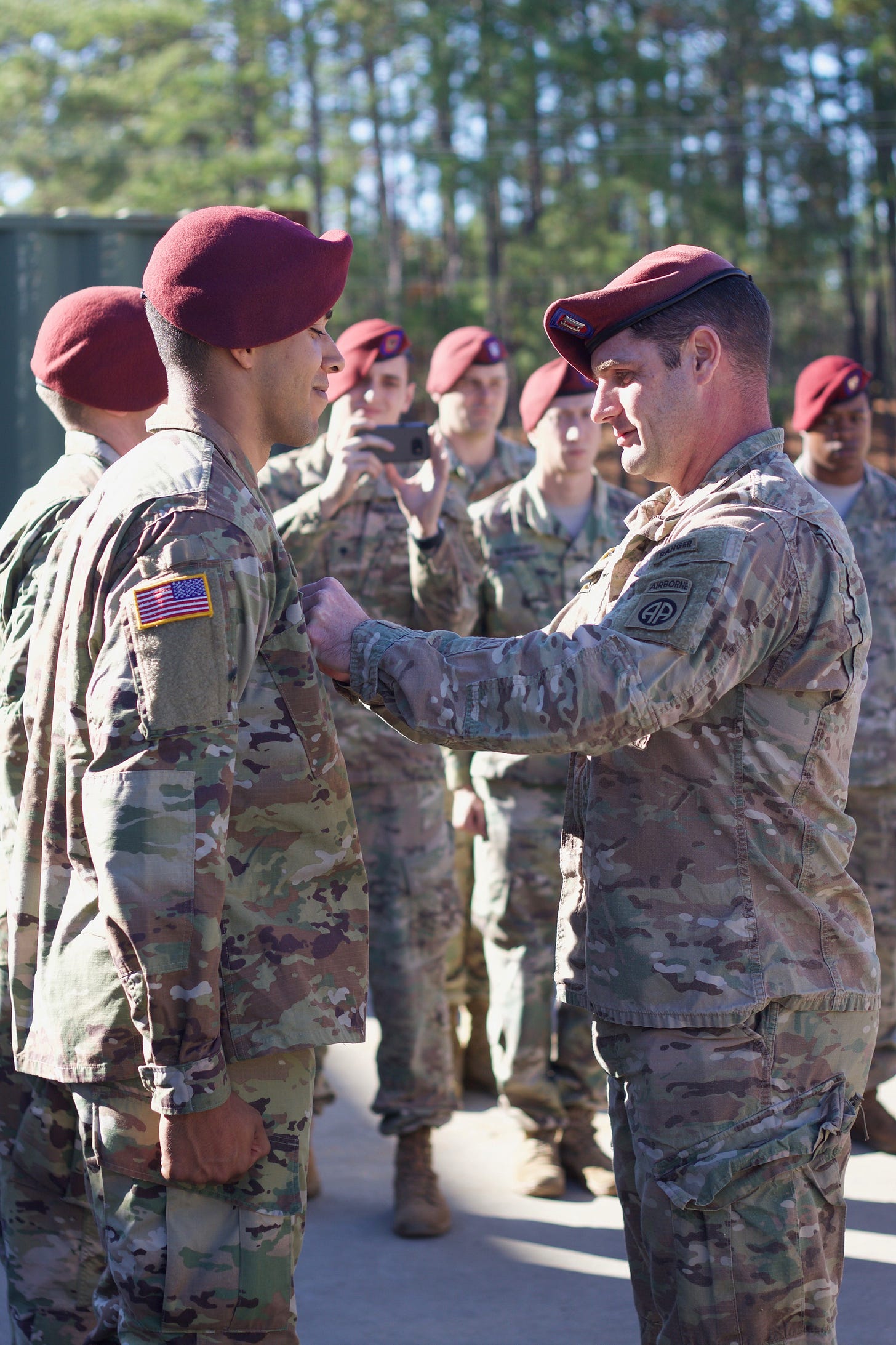
Earning my Ranger Tab was not transformative because Ranger School was enjoyable. It was a life-changing experience because it nearly broke me, and I kept going anyway. Ranger School stripped everything comfortable away: food, sleep, warmth, and any illusion I had about who I was when shit hit the fan. What was left when they were done was something more real than what went in. It was both humbling and empowering. It exposed both serious cracks in the armor of my mind and an inner depth I didn’t know was there.
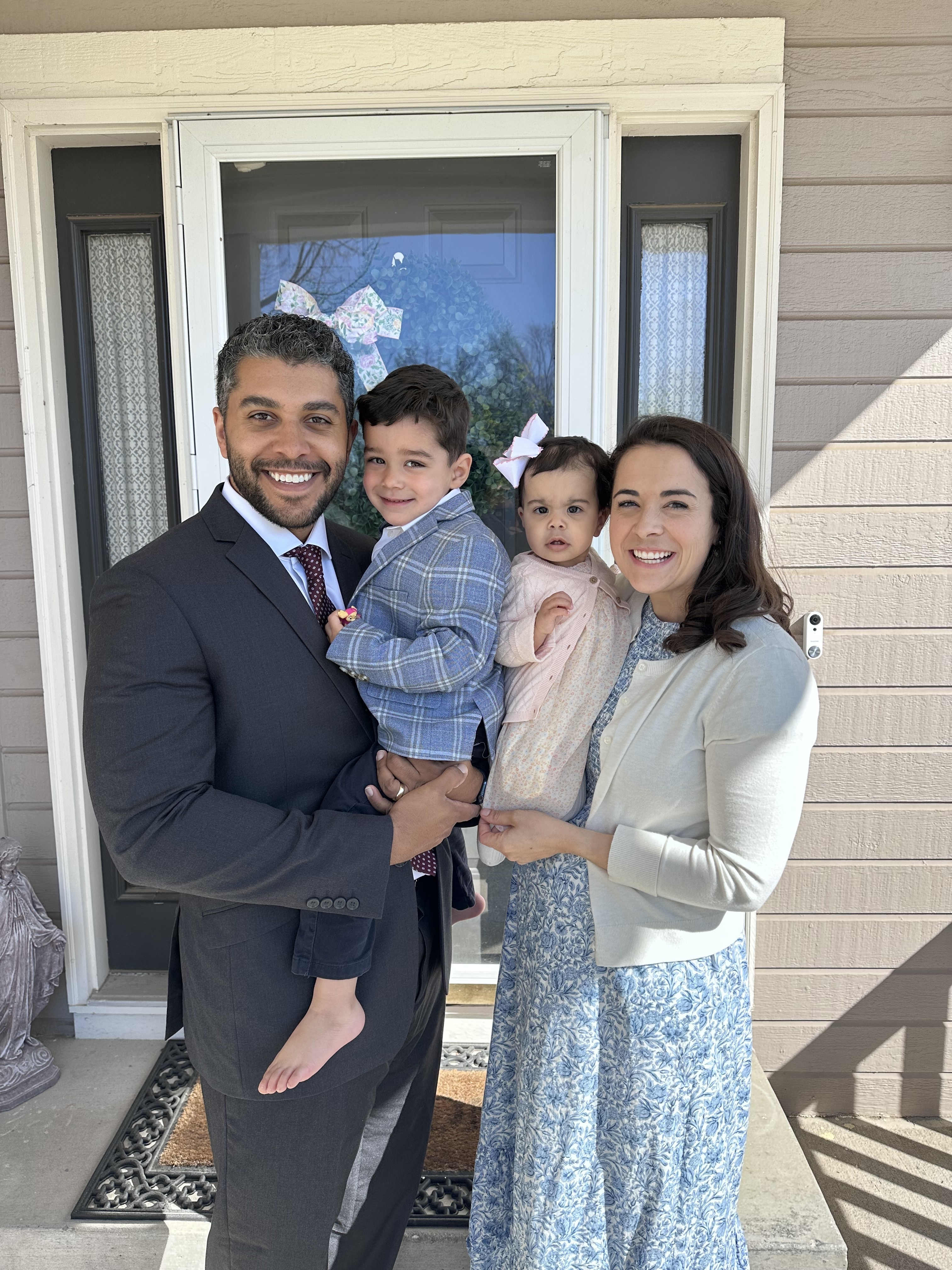
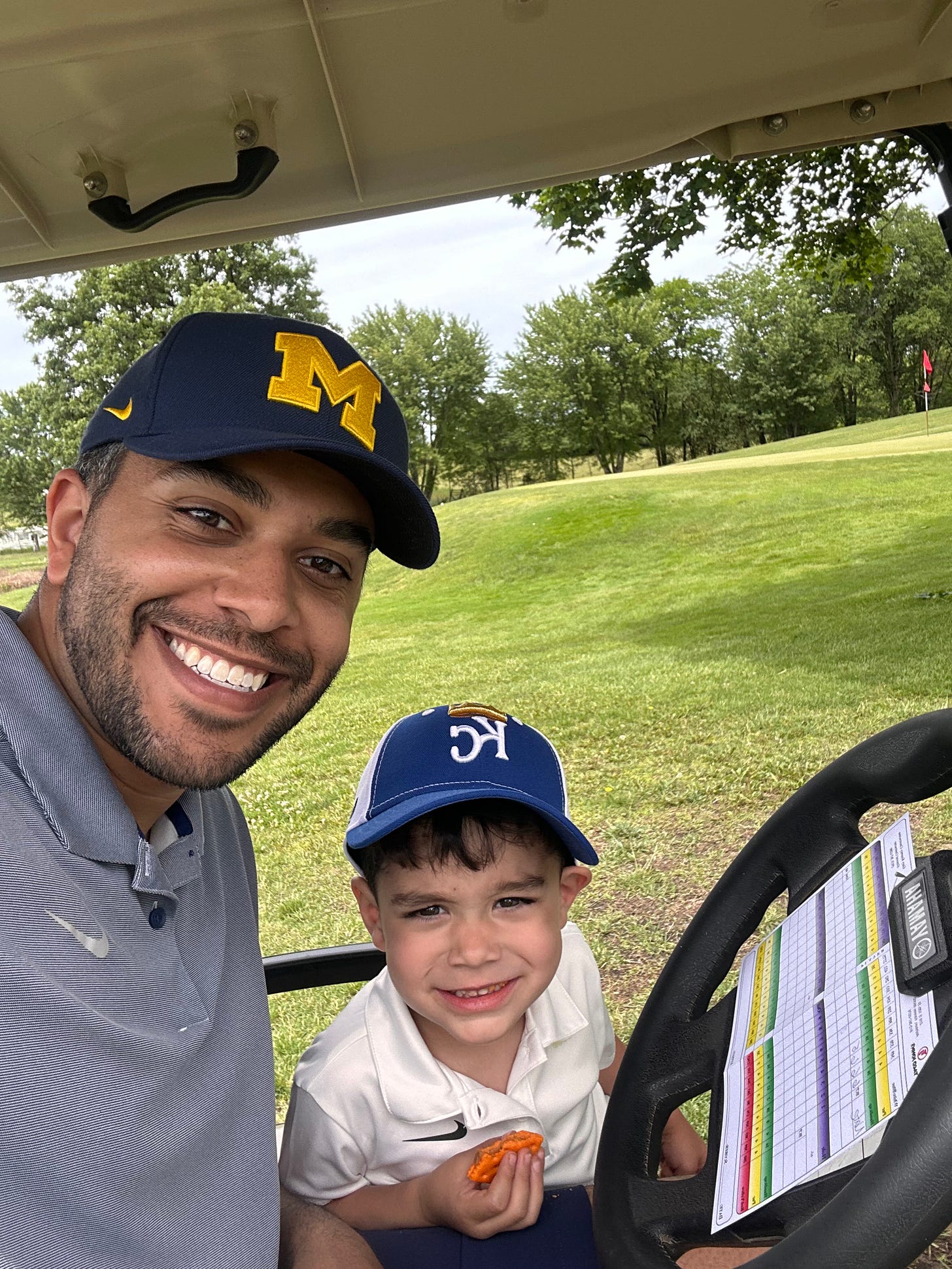
Fatherhood is doing the same thing to me right now, just more slowly and with more temper tantrums. Every time I come home exhausted and choose to engage instead of check out, something is being built in me. Every time I hold the line with my son, when letting it go would be easier, I am becoming more of the man I want him to grow up to be. Every hard conversation with my wife, every budget review, every early morning, every moment of choosing my family over my comfort, these things are forming me.
You cannot get that from being an uncle. You cannot get it from a video game. You cannot get it from a relationship that costs you nothing because you have structured it that way.
The growth cannot be separated from the sacrifice.
The Cohabitation Trap and the Broader Pattern
The uncle mentality shows up in more places than just fatherhood. It is the same logic that drives the cohabitation epidemic.
Living together before marriage is sold as a trial run. A way to get the experience without the commitment. A sensible, modern approach to something that used to require you to actually decide. But decades of research tell a different story. Couples who cohabitate before marriage have consistently higher rates of divorce than those who do not. The relationship that costs you nothing to leave is the relationship you treat like it costs nothing to lose.
This is not an accident. It is a feature of how human beings actually work. We rise to the level of our commitments. When the commitment is absolute, something in us becomes capable of meeting it. When the exit door is always propped open, some part of us never fully walks through the entrance.
The same pattern plays out in careers, in communities, in churches. The person who volunteers for the hard assignment grows. The person who always finds a reason to stay on the sidelines stays exactly where they are. The parishioner who commits to a parish, who sees its problems as their problems, who gives their time and money and energy to something larger than themselves, that person is being shaped. The one who church-hops to avoid obligation remains a spiritual tourist and misses the opportunity to experience true belonging and community.
Responsibility and commitment are the foundations. Sacrifice is the natural fruit of those two things. And fulfillment is the ultimate end that can’t be found without a powerful combination of those three.
The Leadership Call That Most People Ignore
I want to broaden this beyond masculinity for a moment, because I think the principle applies to every person reading this.
Every one of us is called to lead somewhere. In your home. In your workplace. In your parish or community. Leadership is not a title. It is a decision to take responsibility for something beyond yourself and to accept the weight that comes with it.
Most people never fully answer that call. Not because they lack the capacity, but because answering it is uncomfortable. It requires you to care about outcomes you do not fully control. To have hard conversations you would rather avoid. To be present when absence would be easier. To hold a standard when lowering it would buy you peace.
The person who answers the call anyway, who steps into the difficulty rather than engineering their life around avoiding it, that person becomes someone. They develop the kind of character that can only be forged under load. And they discover something that the person on the sidelines never will: that the weight they were afraid of is actually what they were made for.
This is not a modern insight. It is ancient. The greatest spiritual traditions in human history have understood that suffering embraced for a worthy purpose is not merely tolerable. It is sanctifying. It makes you more fully human. It strips away the parts of you that are soft in the wrong ways and builds something harder and truer in their place.
Jesus did not model a life of comfort and self-protection. He modeled a life of radical responsibility for others, freely taken on at enormous personal cost and fueled entirely by love. Whatever your faith tradition, the pattern is clear. The people who have lived most fully have almost universally been those who gave themselves most fully.
Grow Where You Are Planted
I want to close with something important, because I do not want this to land as a condemnation of anyone who is not yet a parent, or who is unmarried, or who is in a season of life that looks different from mine. There are aunts and uncles out there who make great sacrifices for their families. There are boyfriends and girlfriends who really dedicate themselves to working hard to serve their significant other, as Emily did for me when I tore my achilles while we were dating.
The call to responsibility is not a call to a specific life arrangement. It is a call to a posture. To show up fully wherever you are. To stop treating the absence of obligation as the presence of freedom. To find the thing in your current life that is asking something of you and to give it everything you have.
If you are an uncle, be the best uncle those kids have ever seen. Sacrifice for them. Show up consistently. Be the man in their life who demonstrates what it looks like to be someone of character. That is a real calling, and it is worth everything you bring to it.
If you are single, stop treating that season as a waiting room. Your life is happening right now. Your church needs you. Your community needs you. The people around you need a leader who is present, invested, and willing to carry something for them. Be that person.
If you are in a marriage that is hard, do not engineer your way out of the difficulty. Grow into it. The hardest seasons of marriage are often the ones that produce the deepest intimacy, if you refuse to quit.
The point is not that any one path is the only path. The point is that wherever you are, there is a version of your life that requires more of you than you are currently giving. And the gap between what you are giving and what you are capable of is exactly the space where the best version of you is waiting to be forged.
You Were Not Made for the Sidelines
The man who messaged me about being an uncle is not a bad person. He is a person who has been told, by a culture that is deeply confused about what constitutes a good life, that minimizing his exposure to difficulty is a form of wisdom. That fun without responsibility is the better way.
It is not. It is the lesser thing dressed up in the language of freedom.
Real freedom is not the absence of obligation. It is the capacity to choose something worthy and give yourself to it completely. That kind of freedom is only available to people who are willing to carry something heavy. And the people who carry it, who do not set it down when it gets hard, who keep showing up for the people and the purposes that depend on them, those are the people who, at the end of their lives, will look back and recognize that they were fully alive.
The ranger tab is not the point. Fatherhood is not the point. The marriage is not the point.
The point is the person you become when you refuse to take the easy way out.
That person is worth becoming. And you already have everything you need to start.
Where in your life are you currently choosing the simulation over the real thing? Drop your thoughts in the comments.