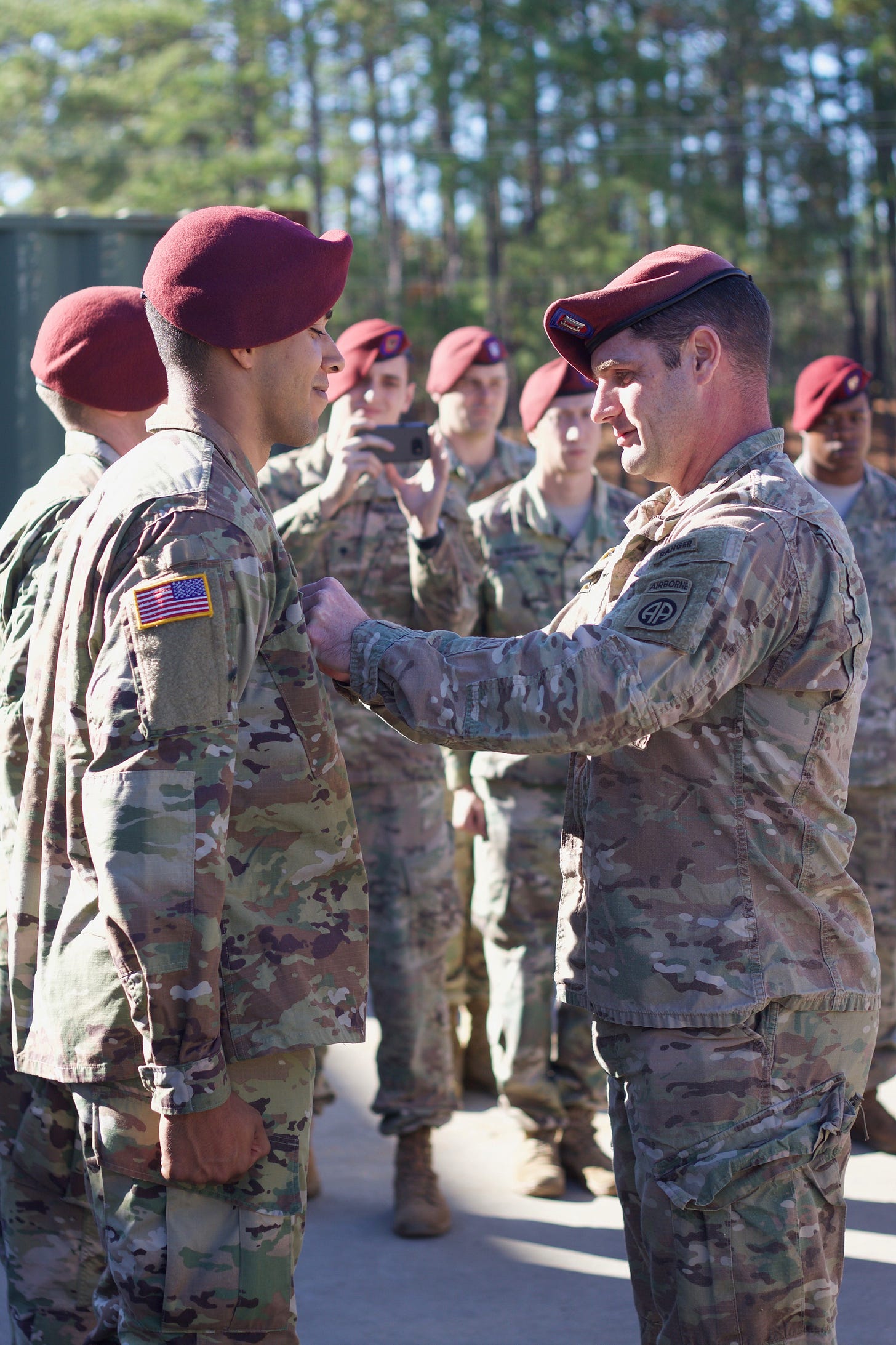
A friend reached out to me recently with a question she had been sitting with for a while. She wanted to know where I stood on female altar servers. She was genuinely curious, not combative, and I appreciated that. I shared my opinion on the matter with her. We prefer attending mass at parishes that have only male altar servers.
I explained my reasoning, but admittedly, I thought it lacked enough depth. It is the kind of question that deserves a thoughtful answer rather than a reflexive one, so I did some digging.
What I found was more interesting than I expected. And it brought me back to something I had observed long before I ever thought seriously about liturgical tradition.
What I Saw Growing Up
I converted to the Catholic faith at 13. I never served as an altar boy. But I have been involved in parish life in various ways ever since, as a lector, an usher, and an Extraordinary Minister of Holy Communion. I care deeply about the Church and about what happens inside the walls of my parish.
And what I remember noticing, even as a young convert still finding his footing, was this: faith felt like a woman's game.
The cantor was a woman. The lectors were women. The altar servers were girls. The Extraordinary Ministers were women. Up front, actively participating in the sacred action of the Mass, there were almost entirely women and a priest. The men, many of them, stood in the back. Literally. Arms folded. Going through the motions at best and completely checking out at worst.
And over time, most of those men stopped coming. They drifted out the back doors they had been standing near and never came back. And most of their kids, the ones I grew up around, do not practice the faith today.
Now, I want to be careful here. I am not making a sweeping causal claim. There were many factors behind those men leaving. But I will say this: the active, visible, participatory life of the Church never seemed to be calling them. It never seemed to be designed with them in mind. And that observation has stayed with me.
The Chicken and the Egg
Here is the honest question I keep coming back to: Did the Church become predominantly female in its active participation because men were already disengaging? Or did men disengage, at least in part, because the active roles of parish life increasingly felt like they belonged to women?
I do not think anyone can answer that definitively. It is a classic chicken-and-egg problem. But I do think it is a question worth sitting with honestly, rather than dismissing it as retrograde or uncharitable to women.
Because here is what we know for certain: the vocations crisis in the American Catholic Church is real. It is severe. And it is not evenly distributed.
The Lincoln Exception
The Diocese of Lincoln, Nebraska, is one of the best-kept secrets in American Catholicism. While dioceses across the country struggle with priest shortages, parish closures, and dwindling Mass attendance, Lincoln tells a different story.
According to data from the Official Catholic Directory and Catholic News Agency, Lincoln has approximately one active priest for every 737 Catholics. The national average is one priest for every 4,723 Catholics. Let that sink in for a moment. Lincoln is not just outperforming the national average; it is also outperforming the state average. It is lapping it. The diocese has so many priests that it sends them to serve in other dioceses that are struggling.
Lincoln is also, as of this writing, the only diocese in the United States that maintains a male-only altar server policy across the entire diocese.
That is not a coincidence I am willing to simply wave away.
What Rome Actually Said
In 1994, the Vatican clarified that female altar servers are permitted under canon law, leaving the decision to each local bishop. But what often gets left out of that story is what else Rome said in the same document.