Seeking Excellence
Politics • Spirituality/Belief • Lifestyle
Choose To Hike The Mountain
-- getting out of your comfort zone
November 08, 2023
post photo preview
 
This article was originally shared on Seeking Excellence Blog in December of '21.  We thought we'd bring it back around for you today - as a reminder to get out of your comfort zones, enjoy life, and hike the mountain. 
 
Choose To Hike The Mountain
 
Isn’t it crazy how different a certain thing can look from a different perspective? Our experience of life is so profoundly based upon not just where we stand, but where we choose to look. As a society, and even as a Church, we have lost our inclination to look for beauty in the world around us. Our planet, our lives, and our reality are all constantly changing. If we don’t start to pay attention, this sweet, short life of ours will just pass us by.


It’s time we become more intentional about the direction of our gaze.

I recently spent four days in the beautiful mountains of Breckenridge, Colorado. I was awe-struck by the views I saw from 13,500 feet above sea level. The mountains, the lakes, and the wildlife were all so foreign to this northeastern boy. I was there for a bachelor party. My friend, Matt, and I woke up earlier than most on Saturday morning and decided to go for a hike while some slept in, and others nursed the combination of a hang over and altitude sickness. We made the intentional choice to rise up and make the hike that morning, and we were the only two who left that weekend having seen the magnificent view from the peak of that mountain.

The view from our Airbnb was pretty amazing, and some were satisfied with that, but Matt and I have always been more adventurous. We’ve always had an internal drive and we have always been willing to push ourselves, and each other, to really see what we were capable of accomplishing. The view from the top of the peak revealed another town settled into the valley. There was a lake off in the distance that capped it off. It was the best view of the weekend, but the prerequisite to seeing it was a willingness to hike the mountain.

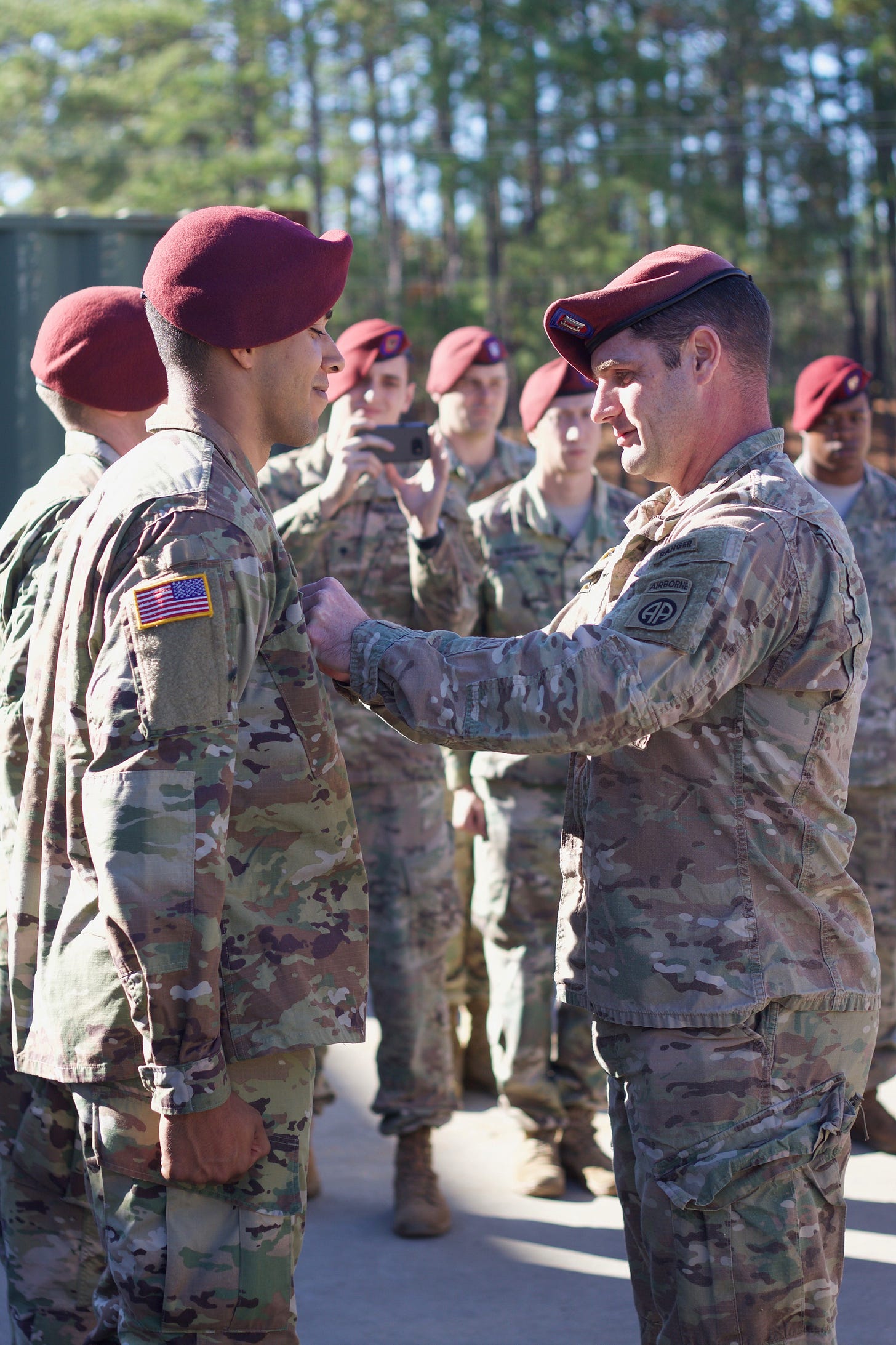
To be honest with you, I hadn’t planned to go up the mountain that morning. I was going to simply walk down to a lookout I had seen the night before and pray the rosary. Seems like a good idea, right? Go down to where I’m comfortable and recite some prayers. Does that sound familiar? I had made a commitment to myself that I wasn’t going to do anything Army related for a year after getting out last August. As fate would have it, I had just passed my one-year mark. This meant it was time to re-live those arduous days of mountain phase of Ranger School and the unforgettable days spent in the mountains of Afghanistan.

God, through Matt, sent me the audible that morning. It was a living example of our need to journey with others, even when we aren’t prepared for it. As Matt and I got down to the lookout, he asked if I wanted to make the climb up to the top. I agreed, despite the fact that I was wearing my somewhat nice jeans and had brought no water.

Naturally, the climb was much steeper than we expected. He’s in much better shape than I currently am, so he seemed to quickly scurry up what we had referred to as a hill in our earlier underestimation. When we got to the top, we just took in the view for a bit. I loved the fresh air and unbelievable 360 view of God’s glorious accomplishments. Even though we hadn’t seen each other in three years, we proceeded to have a deep heart to heart conversation. We shared the highs and lows of our current seasons in life. It was awesome, but it never would’ve happened if I had not had the willingness to hike the mountain.

God is calling each one of us to leave our comfort zones in order to experience His love in a new and powerful way. This doesn’t mean that we stop going to mass or praying the rosary, but we also have to leave space for the ingenuity of our imaginative Creator. He is pursuing your heart like a romantic young man pursues the woman he loves. This can be done through routine and normalcy, but God does like to keep things exciting. Life with Him is meant to be a wonderful adventure. And He will make it so as long as you are willing to drop your plans and hike the mountain, despite how unprepared you might feel.

I spent that weekend in Breckenridge with 12 men in a huge Airbnb tucked into the mountainside. Tomorrow, I will be staying in a bayside resort in Florida by myself. It will be the beginning of a six-day writing trip and retreat away from the world. I can’t wait to be even further won over by the beauty of God’s creation. From the mountains of Colorado, to the lakes of the Carolinas, to the beaches of Florida, this year God has shown me the marvels of His creation in a big way.

The truth is that we don’t have to spend big money to go on fancy trips to see the beauty of what God has created, or to experience adventure with Him. We can also see it in the laugh of a child, in the smile of a loved one, or in the eyes of our beloved. We can also see Him in the hope of those who suffer, in the resilient joy of those who are in the midst of mourning, and in the trusting faith of those who are in uncertain times.

Each day we have the opportunity to stop and smell the proverbial roses. We can appreciate the weather. We can thank God for the beauty of the trees and the clouds. We can delight in the time we spend petting a dog or receiving a smile and wave from a neighbor.

We, as Christian people, ought to enjoy this life.

We should enjoy life even through a pandemic. We should enjoy life even through an election year. We should enjoy life even though there is rioting and looting. We should enjoy life even in a polarized nation. We should enjoy life no matter what the circumstances.

As we do, though, our faith actually ought to push us even further. We shouldn’t just enjoy life for our own sake, but we should strive to make life more enjoyable for others.

When we choose to be the people who will go the extra mile, who will hike to the mountain top to soak in the beauty, who will allow ourselves to be transformed by gratitude and joy, we become beacons of hope and light in this dark world. This is what makes us, the Church, attractive to the world. Our beauty is what makes the truth and goodness so appealing.

There is nothing more captivating than holiness and virtue. The grace of God can and will transform us into the beautiful people we were created to be. He wants us to be His serving hands, His listening ears, His mouths that utter encouraging words during these unpredictable times. Sadly, however, many of us have lost our way and fallen into the same despair that’s promulgated by the world we live in. We are unwilling to adapt and change, to leave our nets behind and start a new journey with our Lord. God is so eager to use us if only we will fully trust in Him.

Brothers and sisters, in a time when all will point out all the bad that is happening, may there always be at least one of us present to point to the good. We all have a mountain to hike, an adventure to live. It may not be what we expected, we may feel unprepared, but God will give us the grace, the strength, and the right people around us so that we can successfully make the climb.


community logo
Join the Seeking Excellence Community
To read more articles like this, sign up and join my community today
0
What else you may like…
Videos
Posts
Articles
The Santa debate!

Is Promoting Santa a Lie? Or Is It Innocent Fun?

00:14:22
"My daughter was really offended by your talk last night." 😅

"My daughter was really offended by your talk last night."

Someone dropped this bomb on me unexpectedly after daily mass this past summer. Although I can sometimes be a bit dicey and bold in my presentations, I was pretty shocked to hear it.

I had given a talk to middle schoolers the night prior on how our faith can help us in managing sadness, anxiety, and stress.

After mass the next day, I was walking in the convention center and was stopped by a woman who asked if I spoke to the middle schoolers the night prior. I responded in the affirmative.

"My daughter was really offended by your talk."

In a flash, I try to recall what I said that might have been the trigger for offense. Nothing came to mind. So I inquired, "Interesting. What was it that bothered her?"

"She said that you told the kids that if you experience anxiety, you can essentially pray it all away. And she has been clinically diagnosed with severe anxiety so it upset her."

"AH okay, I see the misunderstanding here" I ...

00:56:59
I am a Charlie Kirk, not a George Floyd

Over the last few days, I've taken a lot of time to reflect on the importance of this moment for our nation and for the Church.

Here are further reflections on these recent events and what I think we ought to do from here.

00:36:22
Happy Easter!

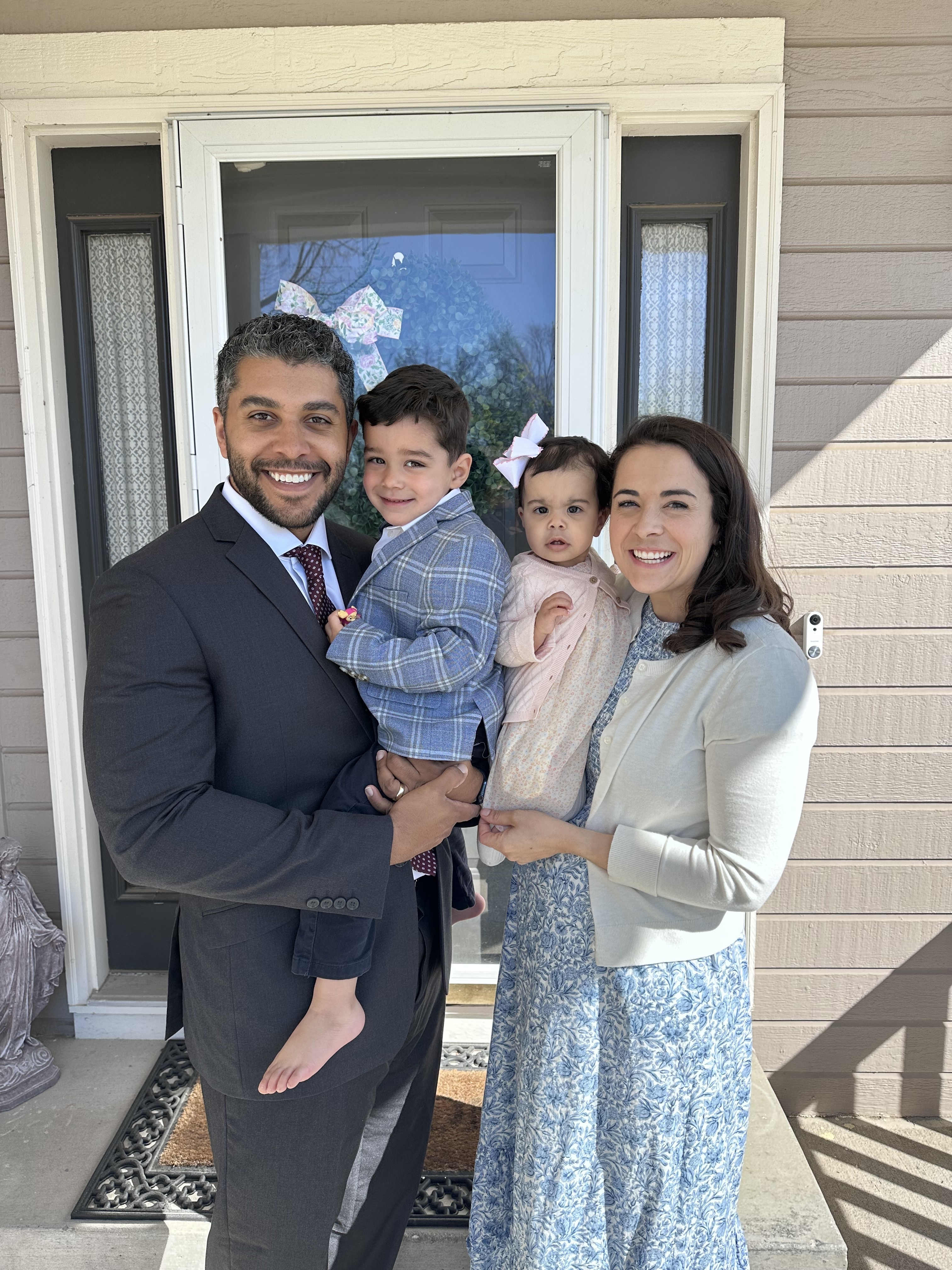
Wishing you a happy Easter from the Crankfields!

post photo preview
You Were Not Made To Do This Life ALone

25% of men ages 15-35 reported feeling serious loneliness the day before being surveyed. That is one in four men. And if you are married with kids, it does not automatically get better.

In this recorded livestream, I break down why the loneliness epidemic is hitting men so hard, why most of us are making it worse without realizing it, and what it actually takes to build real friendships as a busy husband and father.

If you have been feeling isolated, like you do not have the kind of friendships that actually sharpen you, this one is for you.

Watch here:

Be the Parent Your Kids Actually Need

It can be extremely tempting to take the easy way out when it comes to parenting.

Giving the kid the iPad. Letting bad behavior slide. Not disciplining consistently.

In today's podcast episode, I talk about the importance of making those hard parenting decisions and how they will lead to a better tomorrow for you and your kids.

Watch here!

post photo preview
Be Cautiously Optimistic After Easter
What the Catholic Conversion Boom Really means

I want you to imagine you’re playing in a basketball game.

You’re on the bench getting some rest, but your team is really heating up. A deep three goes in, followed by a turnover, and a few more quick buckets.

You do some quick math and realize your team just put together a 12-2 run in the last 3-4 minutes of the game. It’s an away game and the home crowd is quieter than it’s been all game. Your opponents call a timeout to regroup.

Your team is fired up, yelling and high-fiving on their way into the team huddle, and rightfully so. It seems like the adjustments made at halftime are really coming together.

You clap. You cheer. You ride the wave of the moment because it is real and it is worth celebrating.

And then you look at the scoreboard. You are still down 46 points. This reality check hits you like a brick to the face. It sobers you up a bit. You realize that momentum is on your side, but you all still have a long way to go.

That is the Catholic Church in America in April of 2026.

This Easter saw numbers that should genuinely excite every Catholic in this country. The Archdiocese of Newark welcomed 1,701 people into the Church, a 72% increase since 2023. Los Angeles welcomed over 8,500. Boston went from an average of 250 to 300 converts per year to over 680. The Archdiocese of Oklahoma City was expecting a 57% increase in unbaptized people becoming Catholic. According to our CEO at Hallow, Alex Jones, more than 80% of dioceses are seeing an average year-over-year growth of 38% in OCIA enrollment. The University of Illinois campus alone went from 50 students entering the Church last Easter to 120 this year.

This is a genuine 12-to-2 run. The momentum is real. The Holy Spirit is moving in ways that are measurable, documented, and undeniable.

And yet, we are still down 46 points. But stay with me. This article is meant to encourage and challenge you, not just rain on your Easter parade.

What the Scoreboard Actually Shows

Here is the honest picture of where the Church stands in America right now, because I think it is important to name it clearly before we talk about what to do.

For every one person who converts to Catholicism, somewhere between six and ten cradle Catholics leave the Church. The General Social Survey has been tracking this for fifty years. In 1973, 84% of those raised Catholic still identified as Catholic as adults. By 2022, that number had fallen to 62%. One out of every three people raised Catholic has disaffiliated themselves from the Church.

Weekly Mass attendance among cradle Catholics tells an even starker story. In 1973, about 34% of those raised Catholic were still attending Mass weekly as adults. By 2002, it had dropped to 20%. By 2022, it had fallen to 11%. We are losing nine out of ten cradle Catholics when it comes to active practice of the faith.

The conversion numbers we are celebrating this Easter, as genuinely exciting as they are, represent a rebound from a long decline. From 2000 to 2019, the average American diocese saw a 41% decrease in the number of adults entering the Church. What we are witnessing now is a reversal of that trend, not yet a net gain against the broader losses the Church has sustained over decades.

I am not saying this to be a Grinch during this beautiful Easter season. I am saying it because the team that is down 46 points does not get to coast after a 12 to 2 run. It has to keep pressing, and it needs to be strategic about it. The naive optimist says, "Things are going well; let us enjoy this.” The serious leader says, things are moving in the right direction, now let us figure out what we have to do next.

Why Some Parishes Have Dozens and Others Have One

Here is a question worth asking out loud: given the extraordinary momentum we are seeing in some parts of the Church, why are so many parishes still bringing in only one or two converts a year?

My wife and I volunteered for two years in OCIA at Our Lady of Lourdes in Denver. It is a parish known throughout the Archdiocese for its conversion numbers. Dozens every year, consistently, long before this current wave of interest in the faith made headlines. We were there to witness it firsthand, and what we witnessed taught us something important.

Almost every story we heard from people entering the Church sounded like this:

"My sister invited me.”

“My boyfriend is Catholic and started bringing me here.”

“A coworker kept inviting me to events at the parish, and I finally showed up one Sunday.”

“A friend took me to adoration, and I had an experience I could not explain.”

The difference between a parish that brings in fifty converts a year and a parish that brings in one is almost never the quality of the OCIA program. It is the culture of the parishioners. It is whether the people in the pews see evangelization as something the priest does or as something every baptized Catholic is commissioned to do. It is whether Sunday Mass is the end of their Catholic week or the center of a Catholic life that overflows into their relationships, their conversations, and their invitations.

There are parishes in Denver that sit full on Sunday mornings and have brought in one or two converts in years. The same city. Similar demographics. Vastly different outcomes. The difference is not the zip code. It is the intentionality of the people inside the building.

Every parish that has not had a meaningful number of conversions in years owes itself an honest conversation about why. Not a defensive one, an honest one. Because, as Pope Francis said, we are supposed to be a field hospital for sinners, not a museum for saints. If people are not finding their way in, it is worth asking whether the door feels open to those who are exploring or new to the faith.

We Have a Bigger Retention Problem Than a Conversion Problem

I want to address something that rarely gets mentioned in the excitement around conversion numbers, because I think it is the most important strategic challenge the Church faces right now.

Getting people in is only the beginning. Keeping them is the harder and equally urgent work.

The anecdotal reports from OCIA directors around the country suggest that somewhere between 50% and as many as 90% of converts stop attending Mass regularly within a year of their initiation. CARA's broader research paints a somewhat more encouraging picture, suggesting that around 84% of OCIA converts still identify as Catholic years later. But identification is a low bar. The harder question is whether they are practicing, growing, and passing the faith on to their children.

Megachurches chase numbers for numbers’ sake. That is not our model, and it should never become our model. Our theology holds that the sacraments confer grace, that the Eucharist is the source and summit of the Christian life, that membership in the Body of Christ is not a lifestyle choice but an ontological reality with eternal consequences. If we welcome people into that reality and then fail to form them in it, we have not served them. We have given them a certificate and sent them on their way.

What keeps converts in the Church? Overwhelmingly, the same thing that brought them in. Relationship. A sponsor who stayed in contact after Holy Saturday. A community that made room for them. A parish that treated the period after Easter as the beginning of formation rather than the end of the program. The Easter season is not supposed to be an afterthought. It is meant to be the continuation of a lifelong journey in which the Church is committed to walking alongside its newest members.

If your parish welcomed a dozen people into the Church last Saturday and has no plan for what to do with them between now and Pentecost, that is the most important problem to solve before next Easter.

One of the biggest shortcomings of many formation programs is around the spiritual pillar of prayer. The need for relationship in the ongoing practice of the faith mirrors the primary symbol of our faith: the cross. It must go both vertically and horizontally. We have a real human need to develop intimacy with God and real friendship with one another. The best parishes and the best spiritual leaders teach us how to do both while also cultivating an environment and culture that facilitates transformational relationships upward and outward.

The Leaky Bucket: Catholic Education and the Children We Are Losing

There is no point in celebrating the water flowing in if we have not fixed the holes in the bucket.

The data on cradle Catholics leaving the faith is sobering in its timing. Nearly half of those who leave Catholicism do so before they turn 18. Another 30% leave between 18 and 23. That means roughly 80% of the Catholics we lose, we lose before they reach age 24. The attrition is happening in our schools, in our religious education programs, and in our homes. And it is happening at a rate that dwarfs our current conversion gains.

This is where the Church's most important work is happening and where, too often, we are losing the most ground. Catholic schools and religious education programs that do not form genuinely intentional disciples, that teach the faith as a set of facts to memorize rather than a relationship to enter, are not keeping our children. They are giving them a credential and a reason to check out.

What the research consistently shows is that the young Catholics who stay are the ones who had a genuine encounter with Jesus Christ, not just exposure to Catholic content. They had an adult in their life, a parent, a teacher, a youth minister, who lived the faith visibly and authentically in front of them. They were given something to sacrifice for rather than just something to sit through.

This is not a program problem. It is a discipleship problem. And it starts in the home long before it reaches the classroom.

The Question of Openness to Life

If we want the Church to grow, Catholics need to have more children.

The culture has done an extraordinarily effective job of convincing Catholics, including many practicing, well-intentioned Catholics, that two children is the responsible number. That being said, beyond two, you are being reckless, burdening the environment, or simply failing to prioritize your own comfort and career. The Church's actual teaching on openness to life is treated even within many Catholic families as an optional addendum rather than a central and countercultural command.

I am not arguing that every Catholic family must have ten children or that there are never serious reasons to space or limit births. The Church has never said that, and neither have I. What I am saying is that the casual cultural default of stopping at one or two, without any serious prayer or discernment, without any real engagement with what the Church actually teaches about the gift of life, is something that deserves to be named and examined.

I reflect back to my experience in a Catholic grade school in the early 2000s and remember seeing the families with 4-5 children as the “big families”. Most of my closest friends, and I’m talking 80-90%, were from families with 1-2 children. The adventurous parents dared to have 3. And wouldn’t you know it, the same culture that had a closed-mindedness on children also had immense flexibility on divorce. And the fruits of these households are a very low % of children (and their parents) practicing the faith as adults.

Every child raised in a faithful Catholic home is a missionary in the next generation. The demographic reality of the Church in America is inseparable from the question of whether Catholic families are open to the life God may be calling them to receive.

The Challenge: Stop Watching the Run and Get in the Game

I want to close with something direct, because I think the Church's greatest structural weakness right now is not a lack of enthusiasm. It is a surplus of spectators.

Passive Catholics are not going to win this. They never have. The parishes producing dozens of converts are not doing it because they have a better building or a more dynamic pastor (although this does help). They are doing it because the people in the pews have decided that evangelization is their job too. They invite people. They bring friends to events. They make room at their dinner tables and in their lives for people who are searching. They volunteer for OCIA. They sponsor converts and stay in contact after Easter. They give their time and their money to a mission they actually believe in.

The momentum we are riding right now is a gift. It is the work of the Holy Spirit, and it is real. But momentum without strategy dissipates. A 12-to-2 run means nothing if the team calls it a win and heads to the locker room.

Here is what I am asking you to do. Pick one thing from this list and commit to it before Pentecost:

Volunteer for your parish's OCIA program next year. Contact your director now, before you forget. The people who walked into the Easter Vigil as strangers and left as Catholics needed someone to walk the journey with them. Be that person for someone next year.

Invite someone. Not to a debate about Catholicism. Not to a lecture on doctrine. Just to Mass. Just to an event. Just to something that opens a door. Most of the people who entered the Church at Easter this weekend did so because someone who loved them extended a simple invitation.

Commit to your parish. Not just Sunday Mass. One additional commitment. A ministry. A volunteer role. Something that roots you in a community deeply enough that you begin to see its needs as your needs.

Engage actively with your children's formation. Not just driving them to religious ed. Praying with them at home. Talking about the faith around the dinner table. Living it visibly enough for them to see what it looks like to take it seriously.

The scoreboard is real. The deficit is real. But so is the run we are on. And teams that are down 46 points with genuine momentum do not quit. They push. They organize. They get strategic. And sometimes, against every expectation, they win.

What is one thing you are committing to this Easter season to grow the Church in your community? Drop it in the comments.

Read full Article
Father, Not Friend

Gentle parenting is everywhere right now. It fills Instagram feeds, dominates parenting podcasts, and has become the default philosophy for a generation of well-meaning mothers and fathers who want to do better than their own parents did. At its core, the movement emphasizes emotional attunement, empathy, and explaining your reasoning to your children rather than simply demanding obedience.

And I want to be fair: some of that is genuinely good. Connection matters. Emotional intelligence matters. Treating your children as human beings worthy of explanation and respect matters. I do not dismiss any of that.

But taken to its logical extreme, gentle parenting produces something I find deeply troubling: children who have never truly been told no, who have never experienced a consequence they could not negotiate or emotionally outlast, who have been so carefully protected from discomfort that they have never developed the internal capacity to endure it.

I know what that looks like from the inside. Because I was that kid.

What Too Much Freedom Actually Looks Like

My father was not a bad man. But he was an absent one, emotionally if not always physically. He never asked about my grades. He never inquired about my friends. He never wanted to know what I was doing or where I was going. And when I got in trouble, which I did frequently during my first two years of high school, the consequences were almost nonexistent. I would come home having collected another detention, another suspension, and the response was barely a shrug.

Part of the reason I started smoking weed and drinking at 14 was simply that nobody was watching. My parents were too busy working six days a week to enforce a standard. The boundaries that should have been there were not. And nature, as it always does, filled that vacuum. In my case, it filled it with exactly the kind of life I did not want.

I have shared before that at 15, I hit rock bottom. I was on the verge of selling drugs. I had given up basketball, one of the great loves of my life. I was living a double life, seemingly happy on the outside and completely empty on the inside. And when I look back and trace the roots of how I got there, one of the clearest threads is this: I had too much freedom and too few consequences for far too long.

My father's version of parenting lacked a philosophical foundation. It was rooted in absence and indifference. But the result is not entirely different from what you see when parents are so committed to never making their child uncomfortable that they abandon the responsibility to form them. A child without consistent discipline is a child without a father, even if his father is standing in the same room.

Coming Home to Chaos

I came home recently after nearly seven days on the road. I had worked through the weekend. I was tired in that bone-deep way that does not go away with a single good night's sleep. And when I walked through the front door, there was no warm greeting waiting for me.

My 3-year-old son was mid-tantrum. Two out of three nights that week, I walked straight from the driveway into full disciplinarian mode. No transition. No runway. No chance to decompress. Just a small human testing every limit he could find, and a father who had to decide in real time whether to hold the line or let it slide.

I will be honest with you. Everything in me wanted to let it slide. I was exhausted. I felt guilty about being away. I wanted connection, not conflict. And there is a version of myself, a less-formed version, who would have looked the other way, bought peace with permissiveness, and told myself I was being kind.

But I have learned something important about toddlers that changes everything: they cannot yet reason. They cannot think abstractly. They cannot hear a lengthy explanation of why their behavior is problematic and internalize it as a change in conduct. What they can do is experience immediate, consistent consequences and begin to understand that certain behaviors produce certain outcomes every single time. That is not cruelty. That is how you teach a creature who is not yet capable of being taught any other way.

So I held the line. Tired, stretched thin, and holding the line anyway. Because that is the job.

What the Bible Actually Says About Discipline

Hebrews 12 is the passage I come back to most when I think about this. It reads: "For the Lord disciplines the one he loves, and chastises every son whom he receives. It is for discipline that you have to endure. God is treating you as sons. For what son is there whom his father does not discipline? If you are left without discipline, in which all have participated, then you are illegitimate children and not sons."

Read that again. The absence of discipline is presented not as kindness but as abandonment. A child left without correction is not being treated as a son. He is being treated as someone his father does not care enough about to form.

Only for Supporters
To read the rest of this article and access other paid content, you must be a supporter
Read full Article
White Robes and Pony Tails
Should We Have Female Altar Servers?

A friend reached out to me recently with a question she had been sitting with for a while. She wanted to know where I stood on female altar servers. She was genuinely curious, not combative, and I appreciated that. I shared my opinion on the matter with her. We prefer attending mass at parishes that have only male altar servers.

I explained my reasoning, but admittedly, I thought it lacked enough depth. It is the kind of question that deserves a thoughtful answer rather than a reflexive one, so I did some digging.

What I found was more interesting than I expected. And it brought me back to something I had observed long before I ever thought seriously about liturgical tradition.

What I Saw Growing Up

I converted to the Catholic faith at 13. I never served as an altar boy. But I have been involved in parish life in various ways ever since, as a lector, an usher, and an Extraordinary Minister of Holy Communion. I care deeply about the Church and about what happens inside the walls of my parish.

And what I remember noticing, even as a young convert still finding his footing, was this: faith felt like a woman's game.

The cantor was a woman. The lectors were women. The altar servers were girls. The Extraordinary Ministers were women. Up front, actively participating in the sacred action of the Mass, there were almost entirely women and a priest. The men, many of them, stood in the back. Literally. Arms folded. Going through the motions at best and completely checking out at worst.

And over time, most of those men stopped coming. They drifted out the back doors they had been standing near and never came back. And most of their kids, the ones I grew up around, do not practice the faith today.

Now, I want to be careful here. I am not making a sweeping causal claim. There were many factors behind those men leaving. But I will say this: the active, visible, participatory life of the Church never seemed to be calling them. It never seemed to be designed with them in mind. And that observation has stayed with me.

The Chicken and the Egg

Here is the honest question I keep coming back to: Did the Church become predominantly female in its active participation because men were already disengaging? Or did men disengage, at least in part, because the active roles of parish life increasingly felt like they belonged to women?

I do not think anyone can answer that definitively. It is a classic chicken-and-egg problem. But I do think it is a question worth sitting with honestly, rather than dismissing it as retrograde or uncharitable to women.

Because here is what we know for certain: the vocations crisis in the American Catholic Church is real. It is severe. And it is not evenly distributed.

The Lincoln Exception

The Diocese of Lincoln, Nebraska, is one of the best-kept secrets in American Catholicism. While dioceses across the country struggle with priest shortages, parish closures, and dwindling Mass attendance, Lincoln tells a different story.

According to data from the Official Catholic Directory and Catholic News Agency, Lincoln has approximately one active priest for every 737 Catholics. The national average is one priest for every 4,723 Catholics. Let that sink in for a moment. Lincoln is not just outperforming the national average; it is also outperforming the state average. It is lapping it. The diocese has so many priests that it sends them to serve in other dioceses that are struggling.

Lincoln is also, as of this writing, the only diocese in the United States that maintains a male-only altar server policy across the entire diocese.

That is not a coincidence I am willing to simply wave away.

What Rome Actually Said

In 1994, the Vatican clarified that female altar servers are permitted under canon law, leaving the decision to each local bishop. But what often gets left out of that story is what else Rome said in the same document.

Only for Supporters
To read the rest of this article and access other paid content, you must be a supporter
Read full Article
See More
Available on mobile and TV devices
google store google store app store app store
google store google store app tv store app tv store amazon store amazon store roku store roku store
Powered by Locals