Seeking Excellence
Politics • Spirituality/Belief • Lifestyle
From Liberal to Conservative Part Two
How the Black Lives Matter Organization helped me see the lies sold by the Democratic Party
October 02, 2023
post photo preview

One of the traits you will always find in those of us who have left the Democratic Party is a serious skepticism. Almost all of our journeys began by asking these types of questions, rather than blindly accepting the narrative that is forced upon us from all angles.

Back in the States, I was being taught not just what to think, but how to think, through my philosophy classes, discipleship in FOCUS, ROTC training, and Criminal Justice and Philosophy studies. This was the beauty of my liberal arts education, that I was actually developed into a person with an ability to reason, and not just another Progressive clone that automatically accepts and regurgitates Marxist talking points.

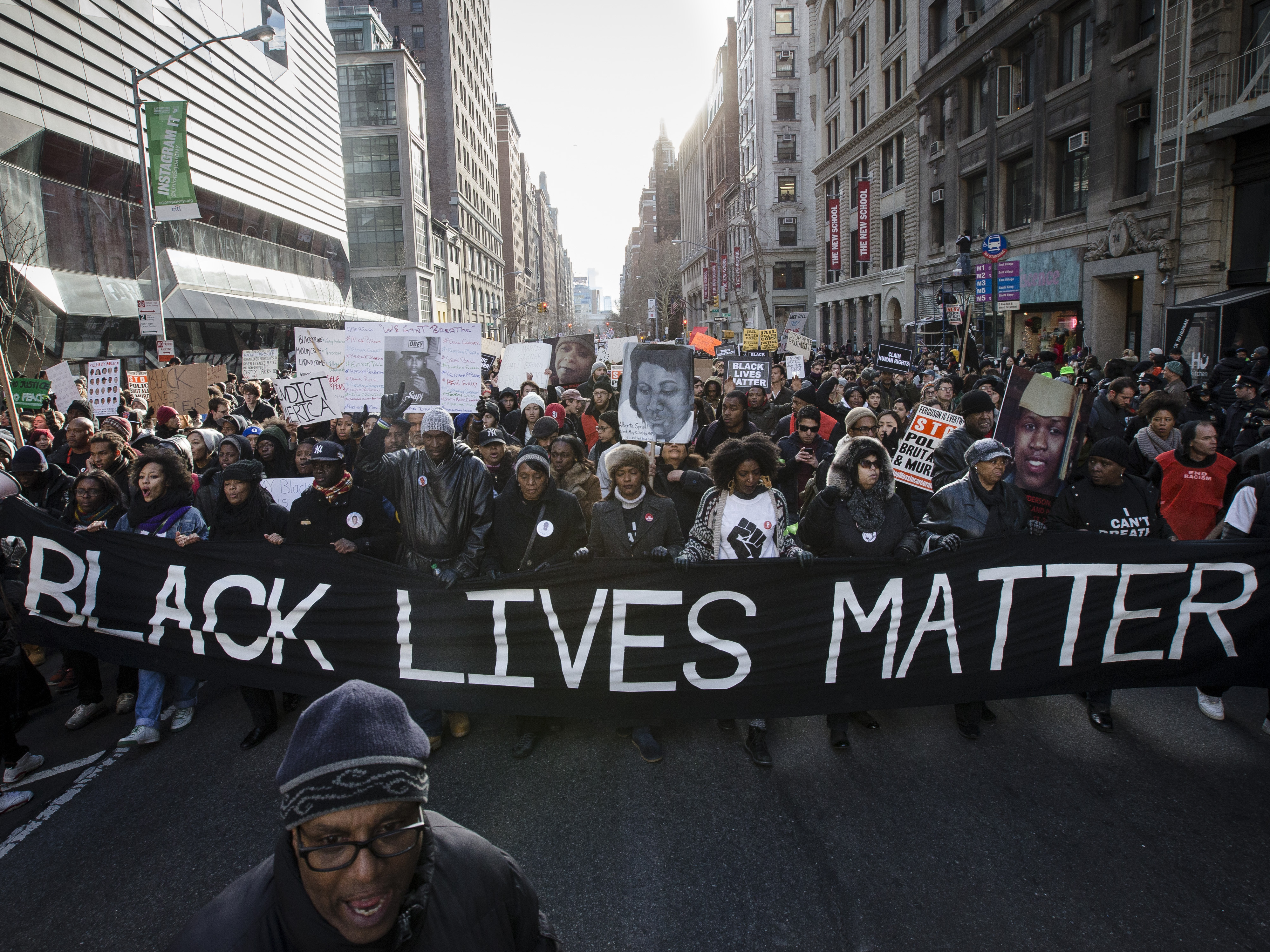
I, along with many others, would get my first real taste of Marxism and soft-totalitarianism in 2013, although I didn’t know it at the time. After George Zimmerman was acquitted from murder charges that came from the death of Trayvon Martin, three self-proclaimed radical Black organizers created a “Black-centered political will and movement building project called #BlackLivesMatter.” Source

When the organization began, it seemed innocent enough for everyone to support. Almost the entire country agreed with the statement that black lives matter, so we quickly began using the hashtag and supporting the organization in a number of ways. What we came to find out, though, was that the organization represented much more than a common sense phrase. Time would reveal that BLM would seek to make extremely complex situations appear black and white, or more accurately black versus white, in support of a specific agenda – the agenda of the radical left.

I want to look at a few of the cases that were central to the popularization of the BLM movement.

First is the case of Trayvon Martin. This case was exceptionally heated and complex. It seemed like new details were being released week after week. Nobody ever really knew what happened, because nobody was there to see it. In an article for the New Yorker written by the self-indulging and technologically inept Jeffrey Toobin, the author cites the call that George Zimmerman, who killed Martin, made to a non-emergency police dispatcher.

According to the details of the call, Zimmerman states that there had been a number of unsolved break-ins in his neighborhood recently. He says, referring to Martin, that there is a very suspicious guy walking around with his hand on his waistband looking at houses. According to the article’s transcript of the call, the dispatcher asked Zimmerman to disclose Martin’s race. He never made mention of it until he was asked.

But the fact that Zimmerman made the statement that Martin was black, regardless of being asked, was used as what would become a foundational strategy of the headlining cases that made the BLM founders and organization famous…and wealthy. Namely that we began assuming things were not just potentially influenced by race, but rather that they were almost exclusively motivated by racial bias and bigotry.

One of the most perplexing parts of the Trayvon case, which would resurface again in different forms in future cases, was that Zimmerman was far from embodying the features of Hitler’s ideal Arian race. It doesn’t take a PhD in sociology to recognize that Zimmerman is actually of mixed race, which started a slew of debates about whether race is primarily biological or cultural.

Since we live in a world of unfettered relativism and subjectivity, Zimmerman was deemed white, despite the fact that nobody asked him what he identified as during this country-wide societally-driven investigation. Ironically, nobody asked him for his pronouns either, because such a thing was considered highly nonsensical and was almost nonexistent at the time. Because Zimmerman was deemed white, his deadly encounter with Martin in 2012 and subsequent acquittal in 2013 was seen as yet another sign of the thriving white supremacy here in America. Shortly after, we got the official creation of BLM, the organization, that same year.

It turns out that when you create an organization to fight an enemy, in this case the enemy being white supremacy and racist white cops, you have to continuously look for the next battle. Similar to my constant search for racism in my early high school years, BLM was able to find racism nearly everywhere they looked, even when it wasn’t there. In 2014, BLM really seized the opportunity with this next case.

On August 9th, 2014, in Ferguson, Missouri, police officer Darren Wilson shot and killed 18-year-old Michael Brown.

An AP News Article from August, 2019, that’s five years later, describes the event as follows, “On Aug. 9, 2014, Michael Brown and a friend were walking in the middle of Canfield Drive, a two-lane street in the St. Louis suburb of Ferguson, Missouri, when a police officer drove by and told them to use the sidewalk. After words were exchanged, the white officer confronted the 18-year-old Brown, who was black. The situation escalated, with the officer and Brown scuffling. The officer shot and killed Brown, who was unarmed.”

On March 4th, 2015, after more than 6 months of FBI investigation, the Department of Justice released their report on the case. Please remember, this is President Obama’s DOJ leading this investigation with the oversight of his appointee to Attorney General, Eric Holder. Their account of the facts derived from their investigation read much differently than the way most news outlets, celebrities, and other influential people discussed the case then and discuss the case now.

Here are some of the highlights that I’ve pulled out from their report:

•   Officer Wilson spotted Brown and a friend walking in the middle of the street

•   Brown and his friend had just committed a strong arm robbery at a nearby convenience store, after which the store clerk called the police and reported that Brown and his friend had stolen several packages of cigarillos

•   Radio transmission recordings establish that Wilson was aware of the theft and had a description of the suspects as he approached Brown and his friend

•   Wilson suspected Brown and his friend were involved in the incident at the Ferguson Market based on the description he heard on the radio and the cigarillos in Brown’s hands

•   Wilson then pulled his car ahead of them at an angle, stopping them from walking further

•   Wilson and other witnesses stated that Brown reached into the SUV through the open driver’s side window and punched and grabbed at Wilson, which is further corroborated by bruising on Wilson’s jaw, scratches on his neck, the presence of Brown’s DNA on Wilson’s collar, shirt, and pants, and Wilson’s DNA on Brown’s palm

•   Wilson withdrew his gun because he could not access less lethal weapons while seated inside the SUV

•   Brown then grabbed the weapon and struggled with Wilson to gain control of it

•   Wilson fired and shot Brown in the hand

•   Autopsy results and bullet trajectory, skin from Brown’s palm on the outside of the SUV door as well as Brown’s DNA on the inside of the driver’s door corroborate Wilson’s account that during the struggle Brown used his right hand to grab and attempt to control Wilson’s gun

•   Soot from the muzzle of the gun found embedded in the tissue of Brown’s hand wound along with other evidence that proves Brown’s was within inches of the muzzle of Wilson’s gun when it was fired

•   Brown proceeded to run at least 180 feet away from the SUV before turning around and charging back at Wilson. Several witnesses stated that Brown appeared to pose a physical threat to Wilson as he moved toward him

The rioting that began the next day would go on for years, resulting in over sixty arrests, more than $4.5 million in damage, and the death of two St. Louis area police officers.  

BLM, like most radical left organizations, never misses an opportunity to seize a tragedy and use it to their advantage. I was a senior in college in the Fall of 2014. And while I had sympathized with some of the other cases that happened in between the deaths of Trayvon Martin and Michael Brown, this one just didn’t seem right.

Having a deep love for the black community and a sincere respect for law enforcement, I started to see myself as being one of the only voices of reason in my social circle. Why not wait until you see the facts, taking things case by case, rather than blindly committing yourself to one narrative?

It was the first time I became aware of the rush to conclusions by both republicans and democrats.

Are some cops racist? Probably, yes. Do some unarmed black men commit acts of violence against police that warrant deadly force? Also yes. Do I believe I can see a 30-second news clip and determine what “justice” means in a particular case that will take the FBI 6 months to thoroughly investigate? Definitely not. But many people do on both sides of the political aisle. And even after the investigation comes out, it’s unlikely that those who spent all that time digging themselves into their fighting positions will be willing to accept the truth and change course.

Black Lives Matter and their passionate followers were the perfect example of this rigid commitment to the narrative. The BLM website currently states:  “In 2014, Mike Brown was murdered by Ferguson police officer Darren Wilson. It was a guttural response to be with our people, our family — in support of the brave and courageous community of Ferguson and St. Louis as they were being brutalized by law enforcement, criticized by media, tear gassed, and pepper sprayed night after night.”

Does that sound a bit misleading based on what the DOJ discovered and released about this case nearly 7 years ago? Of course it does to any rational person. It continuously boggles my mind that Mike Brown is consistently included in the litany of BLM martyrs whose deaths are held up as heroic acts of social justice along with the violence, looting, and other forms of evil behavior that followed them.

Speaking of misleading, did you know that 1,000 or more unarmed black men were killed by the police in 2019? That’s true, at least in the minds of 53.5% of people who self-identified as “very liberal” in a 2020 survey. The actual number according to the Mapping Police Database was 27. According to the Washington Post database, that number was 12.

Maybe you’re thinking that this line of thought is just among those who are extreme, so let’s look at what the moderates reported in the same survey. Among those who self-identify as moderate, some 66.4% of them estimated that the number was about 100 or more, with a quarter of them saying it was at least 1,000 or more. This means that 2/3s of our nation’s moderates believe that the number of unarmed black people killed by police in 2019 was 4-8x higher than it actually was.

Why do you think that is?


Part Three will be released on September 27, 2023 right here on Locals. Stay Tuned!

community logo
Join the Seeking Excellence Community
To read more articles like this, sign up and join my community today
0
What else you may like…
Videos
Posts
Articles
The Santa debate!

Is Promoting Santa a Lie? Or Is It Innocent Fun?

00:14:22
"My daughter was really offended by your talk last night." 😅

"My daughter was really offended by your talk last night."

Someone dropped this bomb on me unexpectedly after daily mass this past summer. Although I can sometimes be a bit dicey and bold in my presentations, I was pretty shocked to hear it.

I had given a talk to middle schoolers the night prior on how our faith can help us in managing sadness, anxiety, and stress.

After mass the next day, I was walking in the convention center and was stopped by a woman who asked if I spoke to the middle schoolers the night prior. I responded in the affirmative.

"My daughter was really offended by your talk."

In a flash, I try to recall what I said that might have been the trigger for offense. Nothing came to mind. So I inquired, "Interesting. What was it that bothered her?"

"She said that you told the kids that if you experience anxiety, you can essentially pray it all away. And she has been clinically diagnosed with severe anxiety so it upset her."

"AH okay, I see the misunderstanding here" I ...

00:56:59
I am a Charlie Kirk, not a George Floyd

Over the last few days, I've taken a lot of time to reflect on the importance of this moment for our nation and for the Church.

Here are further reflections on these recent events and what I think we ought to do from here.

00:36:22
Simple Weekly Review Document!

I meant to have this posted on Wednesday when the episode dropped, but here is the simple form that Emily and I have used for years! We usually use the next page of the document to write out tasks in two columns, one for each of us.

Enjoy!

Weekly_Review_Sample.pdf
Be the Parent Your Kids Actually Need

It can be extremely tempting to take the easy way out when it comes to parenting.

Giving the kid the iPad. Letting bad behavior slide. Not disciplining consistently.

In today's podcast episode, I talk about the importance of making those hard parenting decisions and how they will lead to a better tomorrow for you and your kids.

Watch here!

What It Really Means to Lead Your Family Spiritually

As a husband and father, what does it look like to lead spiritually?

Using biblical insights and expert opinion, this episode dives into spiritual leadership!

Watch now:

Father, Not Friend

Gentle parenting is everywhere right now. It fills Instagram feeds, dominates parenting podcasts, and has become the default philosophy for a generation of well-meaning mothers and fathers who want to do better than their own parents did. At its core, the movement emphasizes emotional attunement, empathy, and explaining your reasoning to your children rather than simply demanding obedience.

And I want to be fair: some of that is genuinely good. Connection matters. Emotional intelligence matters. Treating your children as human beings worthy of explanation and respect matters. I do not dismiss any of that.

But taken to its logical extreme, gentle parenting produces something I find deeply troubling: children who have never truly been told no, who have never experienced a consequence they could not negotiate or emotionally outlast, who have been so carefully protected from discomfort that they have never developed the internal capacity to endure it.

I know what that looks like from the inside. Because I was that kid.

What Too Much Freedom Actually Looks Like

My father was not a bad man. But he was an absent one, emotionally if not always physically. He never asked about my grades. He never inquired about my friends. He never wanted to know what I was doing or where I was going. And when I got in trouble, which I did frequently during my first two years of high school, the consequences were almost nonexistent. I would come home having collected another detention, another suspension, and the response was barely a shrug.

Part of the reason I started smoking weed and drinking at 14 was simply that nobody was watching. My parents were too busy working six days a week to enforce a standard. The boundaries that should have been there were not. And nature, as it always does, filled that vacuum. In my case, it filled it with exactly the kind of life I did not want.

I have shared before that at 15, I hit rock bottom. I was on the verge of selling drugs. I had given up basketball, one of the great loves of my life. I was living a double life, seemingly happy on the outside and completely empty on the inside. And when I look back and trace the roots of how I got there, one of the clearest threads is this: I had too much freedom and too few consequences for far too long.

My father's version of parenting lacked a philosophical foundation. It was rooted in absence and indifference. But the result is not entirely different from what you see when parents are so committed to never making their child uncomfortable that they abandon the responsibility to form them. A child without consistent discipline is a child without a father, even if his father is standing in the same room.

Coming Home to Chaos

I came home recently after nearly seven days on the road. I had worked through the weekend. I was tired in that bone-deep way that does not go away with a single good night's sleep. And when I walked through the front door, there was no warm greeting waiting for me.

My 3-year-old son was mid-tantrum. Two out of three nights that week, I walked straight from the driveway into full disciplinarian mode. No transition. No runway. No chance to decompress. Just a small human testing every limit he could find, and a father who had to decide in real time whether to hold the line or let it slide.

I will be honest with you. Everything in me wanted to let it slide. I was exhausted. I felt guilty about being away. I wanted connection, not conflict. And there is a version of myself, a less-formed version, who would have looked the other way, bought peace with permissiveness, and told myself I was being kind.

But I have learned something important about toddlers that changes everything: they cannot yet reason. They cannot think abstractly. They cannot hear a lengthy explanation of why their behavior is problematic and internalize it as a change in conduct. What they can do is experience immediate, consistent consequences and begin to understand that certain behaviors produce certain outcomes every single time. That is not cruelty. That is how you teach a creature who is not yet capable of being taught any other way.

So I held the line. Tired, stretched thin, and holding the line anyway. Because that is the job.

What the Bible Actually Says About Discipline

Hebrews 12 is the passage I come back to most when I think about this. It reads: "For the Lord disciplines the one he loves, and chastises every son whom he receives. It is for discipline that you have to endure. God is treating you as sons. For what son is there whom his father does not discipline? If you are left without discipline, in which all have participated, then you are illegitimate children and not sons."

Read that again. The absence of discipline is presented not as kindness but as abandonment. A child left without correction is not being treated as a son. He is being treated as someone his father does not care enough about to form.

Only for Supporters
To read the rest of this article and access other paid content, you must be a supporter
Read full Article
White Robes and Pony Tails
Should We Have Female Altar Servers?

A friend reached out to me recently with a question she had been sitting with for a while. She wanted to know where I stood on female altar servers. She was genuinely curious, not combative, and I appreciated that. I shared my opinion on the matter with her. We prefer attending mass at parishes that have only male altar servers.

I explained my reasoning, but admittedly, I thought it lacked enough depth. It is the kind of question that deserves a thoughtful answer rather than a reflexive one, so I did some digging.

What I found was more interesting than I expected. And it brought me back to something I had observed long before I ever thought seriously about liturgical tradition.

What I Saw Growing Up

I converted to the Catholic faith at 13. I never served as an altar boy. But I have been involved in parish life in various ways ever since, as a lector, an usher, and an Extraordinary Minister of Holy Communion. I care deeply about the Church and about what happens inside the walls of my parish.

And what I remember noticing, even as a young convert still finding his footing, was this: faith felt like a woman's game.

The cantor was a woman. The lectors were women. The altar servers were girls. The Extraordinary Ministers were women. Up front, actively participating in the sacred action of the Mass, there were almost entirely women and a priest. The men, many of them, stood in the back. Literally. Arms folded. Going through the motions at best and completely checking out at worst.

And over time, most of those men stopped coming. They drifted out the back doors they had been standing near and never came back. And most of their kids, the ones I grew up around, do not practice the faith today.

Now, I want to be careful here. I am not making a sweeping causal claim. There were many factors behind those men leaving. But I will say this: the active, visible, participatory life of the Church never seemed to be calling them. It never seemed to be designed with them in mind. And that observation has stayed with me.

The Chicken and the Egg

Here is the honest question I keep coming back to: Did the Church become predominantly female in its active participation because men were already disengaging? Or did men disengage, at least in part, because the active roles of parish life increasingly felt like they belonged to women?

I do not think anyone can answer that definitively. It is a classic chicken-and-egg problem. But I do think it is a question worth sitting with honestly, rather than dismissing it as retrograde or uncharitable to women.

Because here is what we know for certain: the vocations crisis in the American Catholic Church is real. It is severe. And it is not evenly distributed.

The Lincoln Exception

The Diocese of Lincoln, Nebraska, is one of the best-kept secrets in American Catholicism. While dioceses across the country struggle with priest shortages, parish closures, and dwindling Mass attendance, Lincoln tells a different story.

According to data from the Official Catholic Directory and Catholic News Agency, Lincoln has approximately one active priest for every 737 Catholics. The national average is one priest for every 4,723 Catholics. Let that sink in for a moment. Lincoln is not just outperforming the national average; it is also outperforming the state average. It is lapping it. The diocese has so many priests that it sends them to serve in other dioceses that are struggling.

Lincoln is also, as of this writing, the only diocese in the United States that maintains a male-only altar server policy across the entire diocese.

That is not a coincidence I am willing to simply wave away.

What Rome Actually Said

In 1994, the Vatican clarified that female altar servers are permitted under canon law, leaving the decision to each local bishop. But what often gets left out of that story is what else Rome said in the same document.

Only for Supporters
To read the rest of this article and access other paid content, you must be a supporter
Read full Article
ICE - A Catholic Perspective

Two Conversations, One Messy Topic

There are topics that reveal something about a person's character by how they approach them, not by what they conclude. Immigration enforcement in America right now is one of those topics. It has become so emotionally loaded, so thoroughly captured by tribal politics, that it is genuinely difficult to find people willing to hold a complex thought about it for more than thirty seconds.

I had two conversations recently that stuck with me, not because they resolved anything, but because they each illustrated a different way of being wrong about this.

The first was with a friend who describes himself as a moderate. He thinks the way ICE treats some people is terrible. He also thinks illegal immigration is a real problem that can't be wished away. He was genuinely curious to hear my perspective, open to where it might take him. That kind of intellectual honesty is rarer than it should be, and I appreciated it.

The second was with a Church leader. A man with real experience watching ICE operate in Southern California, and with family members of Mexican heritage who, despite holding legal status, live in fear of what federal enforcement might mean for people they know. He came to the conversation having already decided what I believed. He seemed to assume I was a Trump loyalist who didn't care about human suffering. He wasn't interested in engaging the complexity. Rather, he wanted to register his objection and move on.

What struck me about both conversations was that neither person was wrong about everything. The coworker was right that illegal immigration is a genuine problem. The Church leader was right that ICE has real accountability issues and that human dignity is not optional. But both were operating with incomplete pictures. And that incomplete picture, whether it comes from the left or the right, is ultimately what makes this issue so hard to think about clearly.

Before I go further: I am not a Trump die-hard. I think he is a generally capable president who is doing a genuinely difficult job that most people would fail at, while also carrying serious personal and political flaws that matter and should be named. I don't believe the ends always justify the means. I also don't believe that disapproving of Trump's style or character is the same thing as having a coherent immigration policy. Those are two different conversations, and we keep mixing them up.

This article is my attempt to disentangle them.

The Numbers Nobody Wants to Sit With

What Actually Happened Under Biden

Any honest conversation about ICE enforcement has to start here, because the emotional temperature of this debate is largely a reaction to what happened at the border from 2021 to 2024.

According to the Pew Research Center's 2025 analysis, the unauthorized immigrant population in the United States reached 14 million in 2023, the highest level ever recorded. In 2021, when Biden took office, that number was approximately 11 million. That is a meaningful increase of roughly three million people in two years, a pace Pew described as record-setting.

Border encounters the metric used by Customs and Border Protection to track every individual stopped or apprehended at the southern border averaged approximately two million per year from 2021 to 2023, according to the Washington Post's analysis of government data. For context, the yearly average during Trump's first term was roughly one-quarter of that.

Now, it is important to be precise here, as both sides abuse these numbers in different ways. Encounters are not the same as permanent residents. Many people encountered are removed or returned. Many who were allowed in were placed in immigration proceedings, meaning they had legal protections pending court dates, not permanent legal status. The Trump administration's claim that "20 million illegal immigrants" entered under Biden is not supported by data, and responsible commentary should say so.

But the growth was real. A Heritage Foundation analysis estimated that approximately 6.7 million new unauthorized residents entered the country between January 2021 and end of 2023. Pew's more conservative estimate put the net unauthorized population at 14 million by mid-2023, up from 11 million. Either way, it represents the largest increase in the unauthorized immigrant population in recorded history. Anyone who denies that a significant problem developed is not being honest.

Much of the growth was driven by Biden administration policies, particularly parole programs for Cubans, Haitians, Nicaraguans, and Venezuelans (the so-called CHNV program) that allowed people to enter the country with temporary protected status rather than going through traditional immigration channels. These were not people sneaking across the desert. They were arriving through programs that critics argued effectively created a backdoor to legal residence. The Biden administration ended those programs in mid-2024, which slowed the growth, but by then, the number was already at a historic peak.

The Obama Comparison Everyone Is Avoiding

Here is the thing that nobody on the left seems willing to engage honestly, and it is perhaps the single most clarifying fact in this entire debate.

Barack Obama deported approximately 3.1 million people over his two terms more than any modern president before him. Immigrant rights groups were so alarmed by his enforcement record that they gave him the nickname "Deporter in Chief." In 2013 alone, his administration deported 432,000 people, the highest single-year total ever recorded.

Trump's first term deportation total was approximately 1.2 million people, significantly less than Obama's eight-year total. Even combining Trump's first term with what his second term has produced so far, his cumulative numbers do not yet approach Obama's. In 2025, the Trump administration carried out roughly 540,000 deportations compared to Obama's 612,000 in 2013 alone, during the first year of his second term.

To be clear: there are real methodological debates here about how deportations are counted, whether border removals and interior removals should be compared the same way, and how Title 42 expulsions are classified. These are legitimate distinctions. But they do not erase the basic fact: the man the left is calling a fascist for deporting people is doing so at a pace that Obama sustained for eight years without anything like the current outrage.

And then there is Tom Homan.

Homan is Trump's Border Czar. He is the face of the current enforcement operation, the man at whom protesters direct their anger, the person whose name has become a symbol of what critics consider cruel and draconian immigration policy. In 2025, he became nationally known for aggressive interior sweeps, threatening to arrest local officials who impede ICE operations, and overseeing enforcement actions that have, at times, detained and transported people with clean records and legal status.

What is less commonly discussed is that, in 2013, Barack Obama appointed Tom Homan to run ICE's Enforcement and Removal Operations. The Obama administration awarded him the government's highest civil service honor, the Presidential Rank Award for Distinguished Service, in 2015. The official ICE press release at the time specifically praised his leadership in expanding deportation capacity, increasing detention beds, and managing the surge of unaccompanied children across the Southwest border.

The Washington Post, in 2015, ran a piece about Homan under the headline: "Thomas Homan deports people. And he's really good at it." That was a compliment.

Trump hired the same man. Obama honored him for doing the same job. Democrats had no significant objection to Homan's work during the Obama years. They are now calling him a Nazi.

I am not saying this to be provocative. I am saying it because if your objection is truly to the tactics of immigration enforcement and not to the fact that a Republican is doing it, then you have some explaining to do about why the same person was your hero nine years ago.

Why the Current Enforcement Looks Different And Why 

Only for Supporters
To read the rest of this article and access other paid content, you must be a supporter
Read full Article
See More
Available on mobile and TV devices
google store google store app store app store
google store google store app tv store app tv store amazon store amazon store roku store roku store
Powered by Locals